What to Do When a Hong Kong Helper Gets Into Debt and the Loan Sharks Call
A practical guide to What to Do When a Hong Kong Helper Gets Into Debt and the Loan Sharks Call.


Understanding your legal position when a helper’s debt follows you home
The phone rings. A voice demands payment for a loan you never knew existed, taken out by the domestic helper who lives in your home. The caller has your address, your landline number, and a menacing tone. Your first instinct might be fear, followed by a nagging worry that you are somehow responsible. You are not. Under Hong Kong law, an employer of a foreign domestic helper bears no legal liability for the helper's personal debts unless the employer explicitly signed as a guarantor. That principle is the foundation of every action you take from this moment forward.
Licensed money lenders and their debt collectors operate under strict conditions set by the Companies Registry. Licensing Condition 10 expressly prohibits them from attempting to recover debts from anyone who is not legally indebted. When a collector contacts you about your helper's loan, that collector is already in breach of regulatory requirements. Knowing this transforms your posture from anxious target to informed complainant. The law draws a bright line between the borrower and everyone else in the household, and that line is your strongest shield.
What the 2026 regulatory changes mean for your household
From 1 August 2026, two significant protections took effect that directly affect foreign domestic helpers and their employers. First, licensed money lenders are now prohibited from requesting borrowers to provide loan referees in connection with any loan application. This removes a common pressure point where helpers felt compelled to list their employers as references, sometimes without the employer's knowledge or consent. Second, debt servicing ratio caps now apply to unsecured personal loans for low-income earners. For monthly incomes of HK$6,000 or below, repayments cannot exceed 35% of income. For incomes between HK$6,001 and HK$12,000, the cap is 40%. Additionally, the repayment period for any unsecured personal loan to a low-income earner must not exceed the remaining term of the borrower's employment contract.
These measures are designed to prevent the spiral where a helper takes a loan that outlasts her visa and becomes unserviceable. If your helper is currently servicing a loan that predates these rules, the terms may differ. Further second-phase measures, including mandatory credit data sharing via Credit Data Smart, are scheduled for 1 June 2027. Because regulatory timelines can shift, verify the current status of these measures directly with the Companies Registry before relying on them in any discussion with a lender or collector.






When harassment crosses into criminal territory
Not all debt collection is illegal, but certain behaviours cross the line immediately. If you receive physical threats, property damage, paint splashing, lock gluing or any form of intimidation from debt collectors, call Police on 999 without delay. These acts are criminal offences under the Crimes Ordinance and the Summary Offences Ordinance. Section 24 of the Crimes Ordinance specifically addresses criminal intimidation: any person who threatens another with injury to person, reputation or property with intent to alarm is liable on indictment to five years' imprisonment. This is not a civil matter to be negotiated. It is a police matter to be reported.
The distinction matters because some employers hesitate, unsure whether the collector's behaviour is merely aggressive or actually unlawful. Paint on your gate, glue in your lock, a threat shouted through your door, a warning that your workplace will be contacted: each of these meets the threshold for criminal intimidation. Document everything. Note the date, time, and exact words used. Photograph any damage before cleaning it. This evidence supports both a police investigation and a complaint to the Companies Registry.
Where to report and what to expect
Hong Kong offers multiple reporting channels, and using them in parallel strengthens your case. For immediate threats or violence, 999 remains the first and only call. For ongoing harassment that falls short of an emergency, the Hong Kong Police Money Lenders Licensing Section handles complaints at 2860 3574. If you suspect fraud or a scam, the Police Anti-Deception Coordination Centre operates on 18222. Separately, the Companies Registry Money Lenders Section accepts complaints about licensed lender misconduct at 2867 2634 or by email. A breach of licensing conditions under the Money Lenders Ordinance is a criminal offence carrying a maximum penalty of a HK$100,000 fine and imprisonment for two years upon conviction. Regulators have both the authority and the incentive to act.
If a debt collector uses your home address as the helper's contact address without your consent, this may breach the Personal Data (Privacy) Ordinance. Complaints can be filed with the Office of the Privacy Commissioner for Personal Data. This avenue is particularly relevant when you discover that a lender or collector has obtained your personal information through the helper's loan application without your authorisation. Contact telephone numbers for all these bodies should be verified as current before use by checking the Hong Kong Police website or the relevant department directly.
What you cannot do, even with good intentions
Watching a helper struggle with debt can prompt a compassionate employer to consider deducting repayments directly from her salary. Do not do this without her written consent. Under the Employment Ordinance, deducting money from a helper's wages to repay a debt without that consent constitutes an unlawful deduction, punishable by a maximum fine of HK$100,000 and imprisonment for one year. The law protects the helper's wages from informal arrangements, no matter how well-meaning. If you wish to assist, any agreement to deduct must be documented, signed, and compliant with the ordinance. The Labour Department can advise on the correct procedure.
Equally, do not pay the debt yourself to make the harassment stop. Doing so may be interpreted as acknowledging responsibility, and it invites further demands. The collector's goal is to extract payment from whoever will pay, and an employer who pays once becomes a target for every subsequent loan the helper takes or is alleged to have taken. Your role is not to solve the helper's debt problem. It is to enforce the boundary that the law has already drawn.
Supporting your helper without assuming liability
Your helper is likely frightened, ashamed, and unsure of her rights. The Labour Department operates a dedicated 24-hour hotline for foreign domestic helpers at 2157 9537, handled by the 1823 service, and a general enquiry hotline at 2717 1771. These lines offer guidance in multiple languages and can explain the helper's options, including debt counselling and legal aid referrals. Encouraging your helper to call is a practical form of support that costs nothing and risks nothing for you.
You can also help by ensuring the helper understands the new lending rules. If she is approached by a lender who asks for a referee, that lender is breaching licensing conditions. If she is offered a loan with repayments that exceed the statutory caps or a term longer than her contract, the offer is non-compliant. Arming her with this knowledge may prevent a second loan from compounding the first. The boundary between employer and guarantor must remain absolute, but the boundary between employer and informed advisor can be navigated with care.
Sources and verification
- fstb.gov.hk — Research source checked for this guide
- cr.gov.hk — Research source checked for this guide
- info.gov.hk — Research source checked for this guide
- cr.gov.hk — Research source checked for this guide
- gma.hk — Research source checked for this guide
- hkreform.gov.hk — Research source checked for this guide
Read next
-

 Hong Kong Hotels and Serviced Apartments Before a Lease
Serviced apartments in Wan Chai, Kennedy Town, and Sai Ying Pun compared for the six weeks before you sign a Hong Kong lease.
-
 Where to Stay in Hong Kong a Shortlist of Districts Compared Honestly
Hong Kong districts vary wildly in rent, space, and commute reality. This shortlist compares where to stay based on what you actually get for your money.
-
 Hong Kong Flights, HKG Airport and the Airport Express
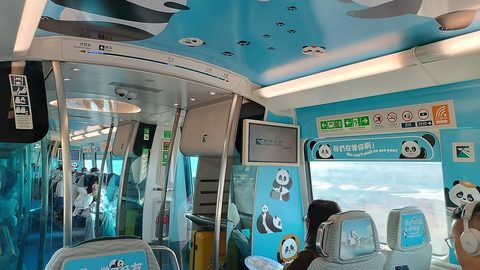
HKG to Central or Kowloon by Airport Express, taxi, or A-bus, plus how Hong Kong's in-town check-in makes it a strong flight hub.
-
 Hong Kong Weekends Hiking Trails Island Day Trips and Visitor Itineraries
Hong Kong's best escapes are minutes from the MTR: ridge hikes with harbour views, car-free islands with seafood, and fishing villages on stilts reachable in under an hour.
-
 Best Time to Visit Hong Kong Weather Calendar and the Two Decisive Months
Hong Kong's best weather arrives from October to early December, with a secondary window in late March. Avoid Chinese New Year closures and the typhoon-prone summer.
-
 Getting Around Hong Kong MTR Octopus Minibuses and the Star Ferry
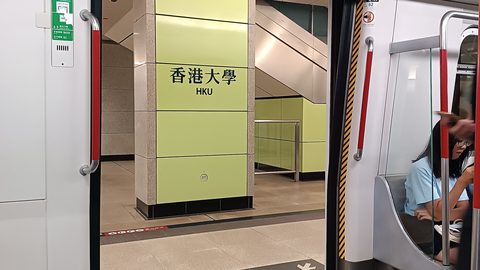
The MTR is the backbone of Hong Kong, but the Octopus card, minibuses, and exact-change rules on buses catch visitors out. Here is how to move without friction.
-
 Space and Privacy Rules for a Live In Helper in a Hong Kong Flat
A practical guide to Space and Privacy Rules for a Live In Helper in a Hong Kong Flat.
-
 Domestic Helper Agency or Direct Hire in Hong Kong the Real Cost Difference
A practical guide to Domestic Helper Agency or Direct Hire in Hong Kong the Real Cost Difference.
-
 Car Free Weekend Escapes From Hong Kong for New Residents
A practical guide to Car Free Weekend Escapes From Hong Kong for New Residents.