Causeway Bay: Dense Shopping, Neon Crowds, and the Flats Above
Causeway Bay is Hong Kong's densest shopping district, packed with department stores and neon, but Victoria Park and the quieter streets east offer respite.
- Flag
-
- ISO code
- HK
Causeway Bay: Dense Shopping, Neon Crowds, and the Flats Above
The Exit E Bottleneck
Saturday afternoon at Exit E on Great George Street, Causeway Bay, 30,000 to 40,000 people pass through every hour between 4pm and 7pm. That is not a festival. That is a normal weekend peak. The crowd at Exit F on Jardine's Bazaar runs 25,000 to 35,000 per hour over the same window. You cannot stand still in either spot. You move with the flow or you get pushed out of it. This is Hong Kong at its most intense, and it is the reason some travellers never leave Tsim Sha Tsui. The better move is to stay, but to know exactly where the pressure drops.
The Retail Engine of the Island
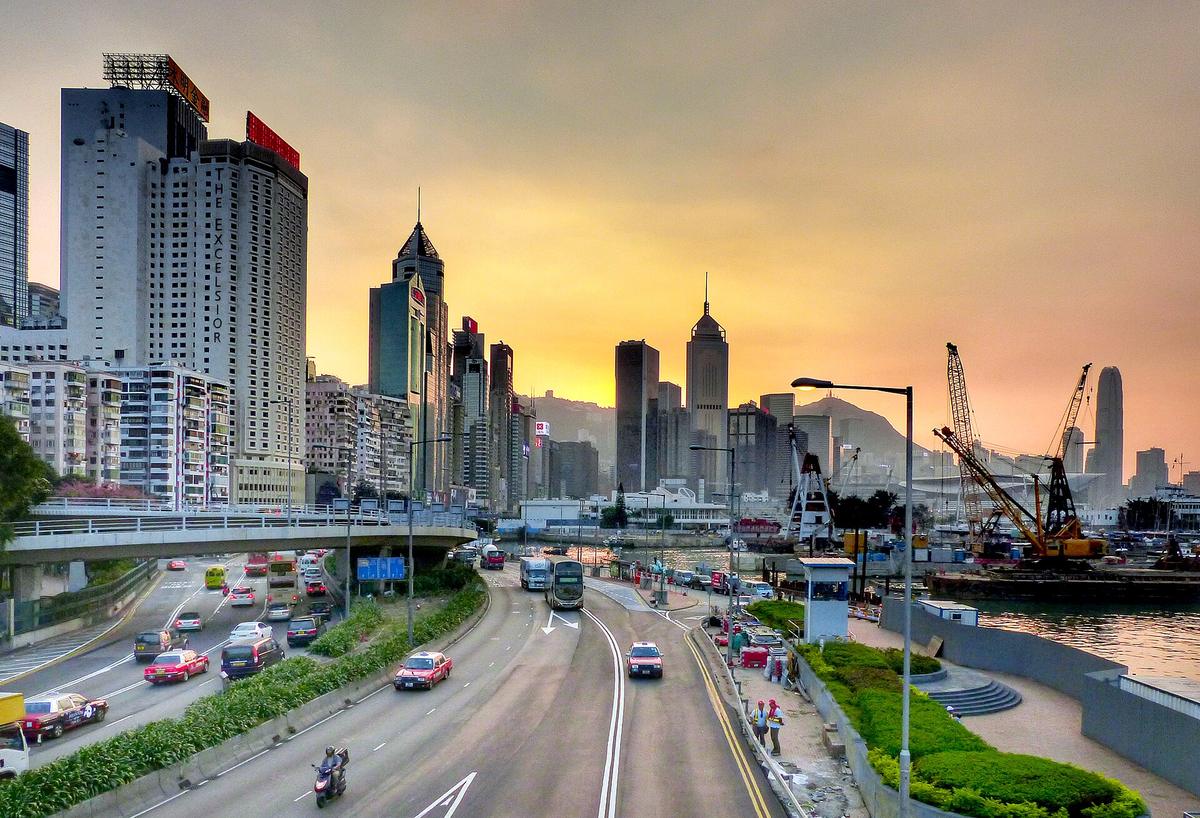
Causeway Bay is a shopping district first. SOGO department store, 400,000 square feet across B2 to 11/F of retail, pulled in HKD 8 to 10 billion in 2024. Its LED screen at Hennessy Road and Great George Street measures 72 square metres and hits 75 to 85 dBA at the crossing. Times Square, three minutes walk south, handles 150,000 to 200,000 visitors daily across 16 shopping levels, with a 1,900 square foot outdoor video wall that registers 70 to 80 dBA on the pavement below. You do not come here for quiet. You come here because this is the retail engine of the island, and if you need a specific Japanese department store floor, stationery store, or electronics chain, it is probably here.
.jpg)
The Escape Routes That Actually Work
The crowd does not extend evenly. At 200 to 300 metres east of Exit E you reach Victoria Park, where pedestrian density drops to non peak levels. At 150 to 200 metres south of Exit E, Leighton Road does the same. From Exit F, 100 to 150 metres east onto Gloucester Road clears out, and 250 to 300 metres west onto Percival Street past Hennessy Road is walkable. Memorise those distances. They turn a suffocating district into a neighbourhood with breathing room.
Victoria Park, 19 Hectares of Silence
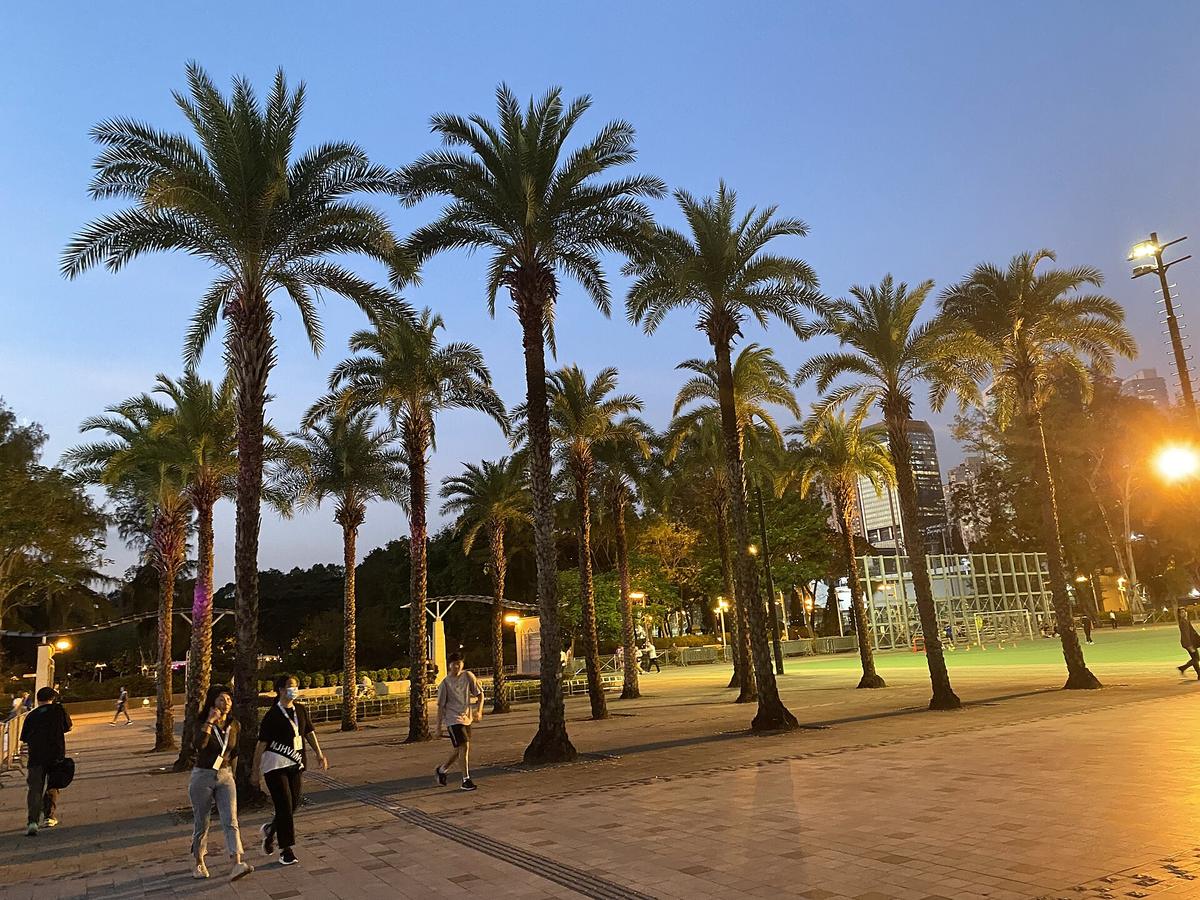
Enter the park from the Causeway Road side. Between 6am and 9am, 20 to 40 tai chi groups practise across the lawns. No one hustles you. No one sells you anything. The park hosts the Lunar New Year Flower Market, 400 to 500 stalls over 7 days drawing 1.5 to 2.0 million visits, but on a normal Tuesday morning it is the most underused large green space on Hong Kong Island. Walk east through the park toward Tin Hau. The high rises thin, the noise drops, and you reach the waterfront in under 15 minutes.
Tai Hang, Five Minutes North
From Causeway Bay MTR Exit A, walk 400 metres north. Tai Hang sits under a building height limit of 12 to 18 storeys, which means it does not feel like the rest of the island. The Fire Dragon Dance runs here on the 14th, 15th and 16th days of the eighth lunar month, but on ordinary evenings the neighbourhood offers dinner in the HKD 200 to 500 per person range, half what you would pay in Times Square for comparable food. Rent per square foot in Tai Hang runs HKD 35 to 50 in 2025 according to the Rating and Valuation Department, noticeably lower than the HKD 40 to 55 in Causeway Bay proper. The difference explains why people live here. You get a quieter version of the same convenience.
Sundays Are Different: What the Closed Roads Mean
The Weekly Transformation
On Sundays, Causeway Bay transforms. Lockhart Road between Canal Road East and Percival Street, Jaffe Road between Canal Road East and Percival Street, and Cannon Street between Gloucester Road and Hennessy Road close to vehicles from 10am to 6pm. The space fills with 15,000 to 25,000 people per square kilometre at peak. Noise levels hit 75 to 85 dBA. This is the weekly gathering of Hong Kong's domestic workers, who occupy the streets with picnic mats, board games, food, and conversation.
How to Behave
Do not treat this as a photo opportunity. It is a functioning social space for people who work six days a week in other people's homes. If you want to understand why Causeway Bay has a residential population of 31,000 to 33,000 but a daytime working population of 120,000 to 150,000, Sunday is the answer. The workers reclaim the streets that the rest of the week belong to shoppers. Walk through respectfully. Buy food from the stalls that appear. Do not step over people's eating areas.
If you dislike crowds, avoid the enclosed roads on Sunday entirely. Victoria Park and Tai Hang stay normal.
Where You Eat, What it Costs, and What Disappeared
The Numbers
Causeway Bay contains 800 to 1,200 licensed food premises as of 2024, according to the Food and Environmental Hygiene Department. That number includes everything from a cha chaan teng serving a pineapple bun with butter for under HKD 30 to Michelin starred tables. The district holds 3 to 5 Michelin starred restaurants, varying by annual guide. A casual lunch runs HKD 50 to 120 per person. A mid range dinner runs HKD 250 to 600.
What You Won't Find
Do not look for dai pai dong in Causeway Bay. The last one closed in the 2010s. The open air cooked food culture that survives in Sham Shui Po and parts of Kowloon does not exist here. The replacement is Bowrington Road Market on Canal Road East, a wet market with over 200 stalls. Go in the morning for fresh produce, dried seafood, and the energy of a working market that has nothing to do with tourists.
Three Food Moves That Work
- Lunch at a SOGO basement food hall. The B2 level has Japanese and Korean takeaway counters. You eat standing, you spend under HKD 80, you move fast.
- Wonton noodle soup on Percival Street. Aim for the shops outside the immediate Times Square radius. The egg noodles stay springy, the prawn wontons are filled whole, and the bowl costs HKD 45 to 60.
- Claypot rice in winter. Go to the small charcoal fired shops on the streets east of SOGO toward the park. Lap cheong sausage and soy rice, cooked to order, HKD 70 to 100.
_22-11-2023.jpg)
| Crowded Point | Direction to Escape | Distance to Non-Peak Density | Time on Foot |
|---|---|---|---|
| Exit E (Great George Street) | East into Victoria Park | 200 300 metres | 3 4 minutes |
| Exit E (Great George Street) | South into Leighton Road | 150 200 metres | 2 3 minutes |
| Exit F (Jardine's Bazaar) | East into Gloucester Road | 100 150 metres | 2 minutes |
| Exit F (Jardine's Bazaar) | West into Percival Street past Hennessy Road | 250 300 metres | 4 minutes |
Why Anyone Lives Here and Who Should Visit
The residential population of Causeway Bay is 31,000 to 33,000 people, living in apartments that rent at HKD 40 to 55 per square foot per month in 2025. That is less than Central, where the same metric runs HKD 55 to 75, and roughly equal to Wan Chai at HKD 38 to 50. Residents trade square footage for convenience. They walk to work, to wet markets, to the park, and to the MTR. The median household income of HKD 38,000 to 42,000 monthly in the 2021 Census suggests a neighbourhood of professionals who value time over space.
Should You Go?
Visit Causeway Bay if you are a shopper who needs departmental stores with Japanese inventory, or a walker who wants to cover a dense district in half a day and then disappear into a park or a quieter neighbourhood. Skip Causeway Bay if you hate pedestrian crowds, want restaurants where you can linger without being rushed, or expect the open air cooking culture of Mong Kok or Sham Shui Po. The district works best as a morning and early afternoon stop. By 5pm on Saturday, you should be in Victoria Park or Tai Hang.
Common Questions
Is Causeway Bay safe at night?
Yes. Hong Kong is one of the safest cities in the world. The 200 to 400 noise complaints filed annually with the police reflect noise, not crime. The shopping streets are lit and crowded until 11pm. Residential streets east of Victoria Park are quieter but still safe for solo travellers.
How do I get from Causeway Bay to Victoria Peak?
Take the MTR from Causeway Bay to Admiralty (two stops, Island Line Westbound). Exit onto Garden Road and take bus 15 to the Peak Galleria, or walk to the Peak Tram Lower Terminus from Admiralty via the covered walkway. The tram queues badly on weekends.
Should I stay in Causeway Bay or Tsim Sha Tsui?
Stay in Causeway Bay if you plan to shop on Hong Kong Island and prefer quick access to Victoria Park and Tai Hang. Stay in Tsim Sha Tsui if you want harbour views, museums, and ferry access. Do not stay in both. Pick one and use the MTR.
What is the household income in Causeway Bay?
The median household income was HKD 38,000 to 42,000 per month in the 2021 Census, published by the Census and Statistics Department. Average household size is 2.6 persons. That income supports the HKD 40 to 55 per square foot monthly rents reported for 2025.
Read next
-
 Living in Causeway Bay What a Flat Costs and Weekend Crowds
A realistic look at monthly rents in Causeway Bay, from aging walk-ups to new towers, and what it feels like to navigate the weekend crowds outside your front door.
Living in Causeway Bay What a Flat Costs and Weekend Crowds
A realistic look at monthly rents in Causeway Bay, from aging walk-ups to new towers, and what it feels like to navigate the weekend crowds outside your front door.
-
 Eating in Causeway Bay Beyond the Mall Food Courts
A guide to the disappearing local food spots in Causeway Bay, from alleyway dai pai dongs to upper-floor cha chaan tengs, far from the mall food courts.
Eating in Causeway Bay Beyond the Mall Food Courts
A guide to the disappearing local food spots in Causeway Bay, from alleyway dai pai dongs to upper-floor cha chaan tengs, far from the mall food courts.
-
 Hong Kong First Arrival Guide From Airport to Understanding the City
Hong Kong rewards those who treat it as a series of distinct neighbourhoods rather than a single city centre. Here is the geography and rhythm every newcomer needs.
Hong Kong First Arrival Guide From Airport to Understanding the City
Hong Kong rewards those who treat it as a series of distinct neighbourhoods rather than a single city centre. Here is the geography and rhythm every newcomer needs.
-
 Hong Kong Hotels and Serviced Apartments Before a Lease
Serviced apartments in Wan Chai, Kennedy Town, and Sai Ying Pun compared for the six weeks before you sign a Hong Kong lease.
Hong Kong Hotels and Serviced Apartments Before a Lease
Serviced apartments in Wan Chai, Kennedy Town, and Sai Ying Pun compared for the six weeks before you sign a Hong Kong lease.
-
 Where to Stay in Hong Kong a Shortlist of Districts Compared Honestly
Hong Kong districts vary wildly in rent, space, and commute reality. This shortlist compares where to stay based on what you actually get for your money.
Where to Stay in Hong Kong a Shortlist of Districts Compared Honestly
Hong Kong districts vary wildly in rent, space, and commute reality. This shortlist compares where to stay based on what you actually get for your money.
-
 Hong Kong Flights, HKG Airport and the Airport Express
HKG to Central or Kowloon by Airport Express, taxi, or A-bus, plus how Hong Kong's in-town check-in makes it a strong flight hub.
Hong Kong Flights, HKG Airport and the Airport Express
HKG to Central or Kowloon by Airport Express, taxi, or A-bus, plus how Hong Kong's in-town check-in makes it a strong flight hub.
-
 Wan Chai vs Causeway Bay Hong Kong The Island's Two Best Value Addresses Argued
Wan Chai and Causeway Bay both pack value into Hong Kong Island addresses: one delivers wet markets and old-street nightlife, the other neon shopping and Victoria Park breathing room.
Wan Chai vs Causeway Bay Hong Kong The Island's Two Best Value Addresses Argued
Wan Chai and Causeway Bay both pack value into Hong Kong Island addresses: one delivers wet markets and old-street nightlife, the other neon shopping and Victoria Park breathing room.
-
 Hong Kong Expat Cost of Living Broken Down by Lifestyle Tier
Real annual costs for expats in Hong Kong: budget, comfortable, and premium tiers covering rent by district, school fees, domestic helpers, and flights home.
Hong Kong Expat Cost of Living Broken Down by Lifestyle Tier
Real annual costs for expats in Hong Kong: budget, comfortable, and premium tiers covering rent by district, school fees, domestic helpers, and flights home.
-
 How to Set Up Your Finances When You First Arrive in Hong Kong
Open the right bank account, set up Octopus and FPS, and avoid costly transfer fees. A practical money setup guide for new arrivals in Hong Kong.
How to Set Up Your Finances When You First Arrive in Hong Kong
Open the right bank account, set up Octopus and FPS, and avoid costly transfer fees. A practical money setup guide for new arrivals in Hong Kong.