Kennedy Town: End of the Island Line, Sunset Waterfront, and Lower Rent
Kennedy Town sits at the western end of the Island Line, offering a waterfront promenade, lower rent than Central, and a local neighbourhood feel that survives.
- Flag
-
- ISO code
- HK
Kennedy Town: the End of the Island Line
Eight minutes. That is the MTR journey from Kennedy Town to Central, platform to platform, on the scheduled timetable. You can commute from the last stop on the Island Line to the financial heart of Hong Kong Island faster than you can walk from one end of Mong Kok to the other. Rent for a private apartment here in 2025 ran HK$45 to HK$55 per square foot, net, depending on building age and whether you get a sea view. That is a 5 to 10 percent discount against Sai Ying Pun, one stop east. For that discount, you trade a slightly longer train ride and a neighbourhood that the MTR did not reach until 2014.
What the MTR Brought and What Stayed
The Post-2014 Food Scene
Before the tracks reached Kennedy Town, this was a tram terminus and a slaughterhouse district. The tram still terminates here. The slaughterhouses are gone. What arrived after December 2014 was a 40 percent increase in food and beverage licences over the next five years. The bars and restaurants that opened along the Praya and on the side streets are not the polished-up franchises that dominate Central. They are independent operations: a coffee shop doing a flat white for HK$42 to HK$50, a pub pouring a local pint for HK$65 to HK$85, a mid-range restaurant where a dinner main course lands at HK$180 to HK$280.
The Old Fabric Holds
But the older fabric held. The walk-up tenements built in the 1950s and 1970s still house the population that was here before the line opened. Sai Wan Estate, completed in 1958, and Kwun Lung Lau, finished in phases across the 1980s, sit within the same streets as the glass towers along Belcher Bay. The residential towers on the reclaimed waterfront, The Belcher's among them rising to 227 metres, were built between 2000 and 2020. The gap between those two worlds, the public housing blocks and the high-rise condos, is a short walk.

The Waterfront You Use Every Day
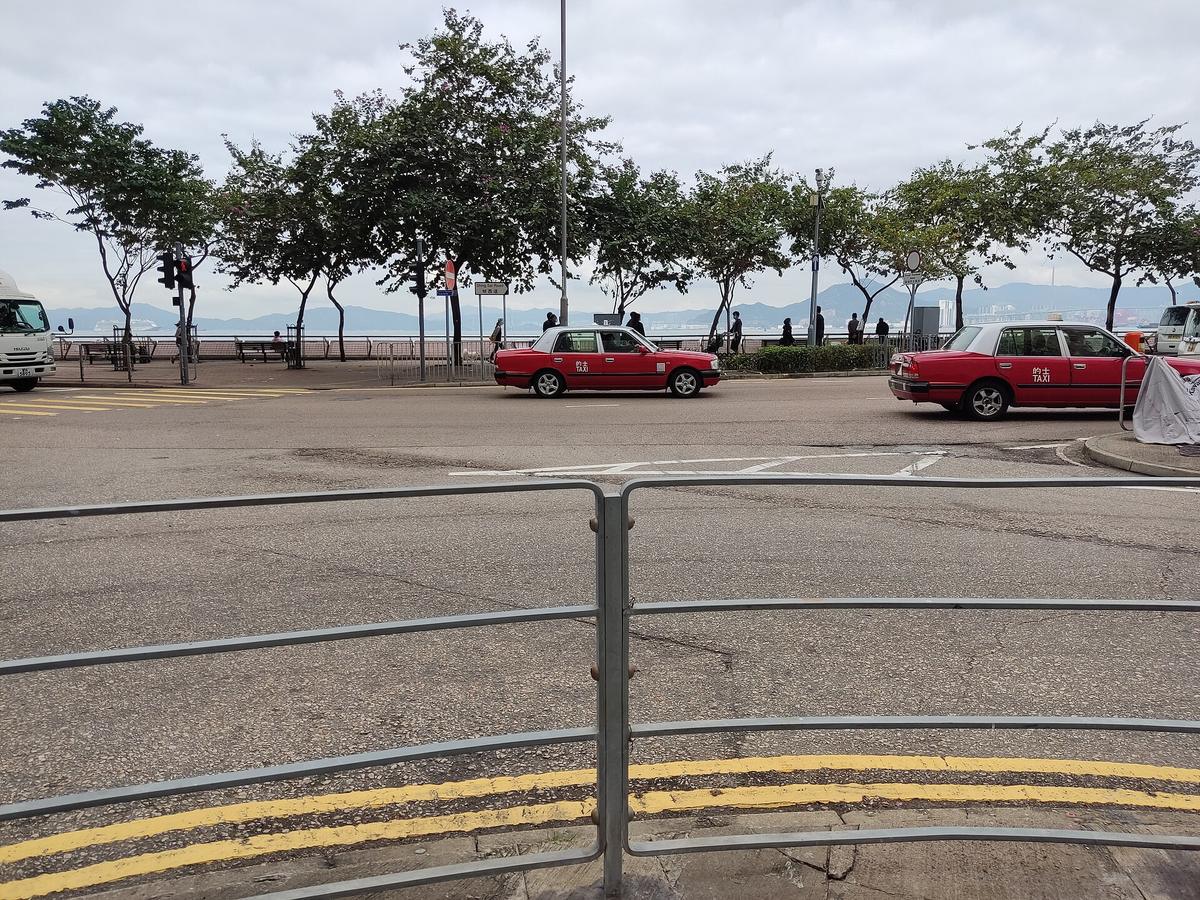
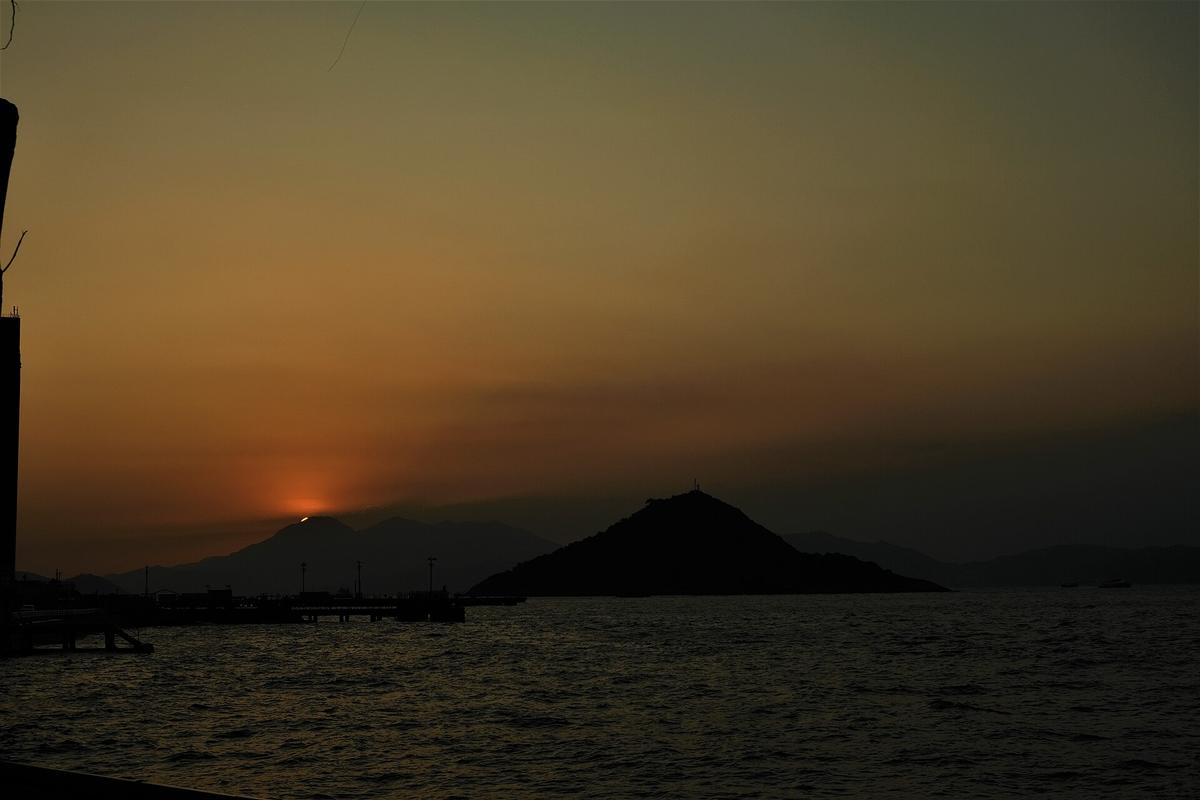
The Kennedy Town Praya, from Forbes Street to Sai Cheung Street, runs along the southern edge of Belcher Bay. This is reclaimed land, filled in during the late 19th and early 20th centuries. The waterfront promenade itself is the public reward for living at the end of the line. Belcher Bay Park, opened in 2011 and covering 1.2 hectares, gives you a green strip of grass and benches oriented toward the harbour.
The sunset azimuth from the Praya sits at roughly 270 to 290 degrees, depending on the season. That means the sun sets directly ahead of you, not off to the side. You do not need to walk to a viewpoint or pay for a rooftop bar. Walk to the railing after work. That is the whole plan.
Is the Commute Worth the Rent
The Numbers on Travel Time
The MTR takes eight minutes, platform to platform. The bus takes 15 to 30 minutes depending on the route and the time of day. The tram, the old vehicle that still rattles through the district, takes 25 to 40 minutes. You have three viable options. The bus and tram run on the surface and expose you to the same street-level delays as every other vehicle on Hong Kong Island. The MTR runs underground, every two to four minutes, and puts you at Hong Kong Station in under a quarter of an hour from your platform. Take the MTR. The surface routes are for days when you are not in a hurry.
What You Get for That Ride
Sai Ying Pun, one stop east, offers more traditional wet markets and dai pai dongs. Kennedy Town tilts toward a younger professional and expatriate demographic. The difference is not dramatic, but it is visible. You see more people walking dogs along the Praya at 7pm. You see fewer families buying dried seafood from open-fronted shops. The trade-off is plain: you give up some of the raw Cantonese street life that Sai Ying Pun still holds, and you get a waterfront that feels like a communal balcony.
The Currency of Space
Hong Kong is a dense, humid, vertical city. The pavement is narrow, uneven, and often blocked by scaffolding or queues. Walking takes longer than the map suggests. Air conditioning indoors is set punishingly cold even in July. The city rewards travellers who treat it as a series of neighbourhoods rather than a checklist. Use Kennedy Town as a base if you value arriving home to a real street, not a hotel lobby, and if you are willing to ride the MTR deliberately between districts. The common mistake is staying only in Tsim Sha Tsui or Central and missing the fact that the best experiences, the hikes, the islands, the markets, require deliberate travel anyway.
For a potential resident, the decision narrows to a single question: can you tolerate a slightly longer train ride each morning in exchange for a 5 to 10 percent rent reduction and a sunset over the harbour that belongs to the neighbourhood, not to a hotel bar? If the answer is yes, Kennedy Town is the last place on Hong Kong Island where that trade still works.

| Mode | Time | Cost Range |
|---|---|---|
| MTR (Island Line) | 8 minutes (scheduled) | Adult Octopus fare to Central, 2025 |
| Bus | 15–30 minutes | Varies with route, time of day |
| Tram | 25–40 minutes | Varies with traffic |
Frequently Asked Questions
How long is the MTR ride from Kennedy Town to Central?
Eight minutes, platform to platform, on the scheduled timetable. The bus takes 15 to 30 minutes. The tram takes 25 to 40 minutes.
Is Kennedy Town cheaper than other Hong Kong Island neighbourhoods?
Yes. Private housing average rent in 2025 was HK$45 to HK$55 per square foot net. That is 5 to 10 percent less than equivalent units in Sai Ying Pun, one stop east on the Island Line.
When did the MTR reach Kennedy Town?
Kennedy Town station opened on 28 December 2014 as the western terminus of the Island Line.
Can you see the sunset from the waterfront?
Yes. The Kennedy Town Praya faces west to west-northwest, azimuth 270 to 290 degrees. The sun sets directly ahead of the promenade throughout the year.
What kind of restaurants and bars are in Kennedy Town?
The MTR extension drove a roughly 40 percent increase in F&B licences between 2014 and 2019. You will find independent coffee shops, pubs, and mid-range restaurants. A flat white costs HK$42 to HK$50. A pint of local draft beer costs HK$65 to HK$85. A main course at a mid-range restaurant runs HK$180 to HK$280.
What is the difference between Kennedy Town and Sai Ying Pun?
Sai Ying Pun has a higher concentration of traditional wet markets and dai pai dongs. Kennedy Town has a higher proportion of expatriate residents and young professionals. The two neighbourhoods are one MTR stop apart.
What is the tallest building in Kennedy Town?
The Belcher's Tower 1 and Tower 2, both reaching 227 metres across 63 storeys. Towers 3 and 5 reach 220 metres across 61 storeys.
Read next
-
 Living in Kennedy Town The Sunset Premium and the Fifteen Minute Commute
An honest breakdown of Kennedy Town rental costs, focusing on the price difference for a sunset waterfront view and the real daily commute time to Central.
Living in Kennedy Town The Sunset Premium and the Fifteen Minute Commute
An honest breakdown of Kennedy Town rental costs, focusing on the price difference for a sunset waterfront view and the real daily commute time to Central.
-
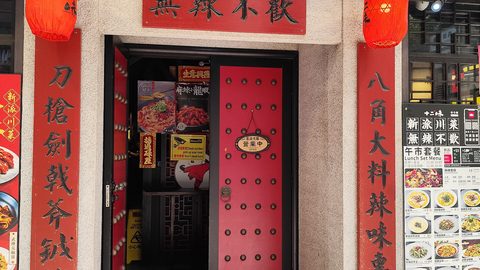 Eating in Kennedy Town Along the Waterfront Strip and the Old Shops
A guide to Kennedy Town's food scene that contrasts the new waterfront restaurants with the surviving old-school noodle shops and dai pai dongs inland.
Eating in Kennedy Town Along the Waterfront Strip and the Old Shops
A guide to Kennedy Town's food scene that contrasts the new waterfront restaurants with the surviving old-school noodle shops and dai pai dongs inland.
-
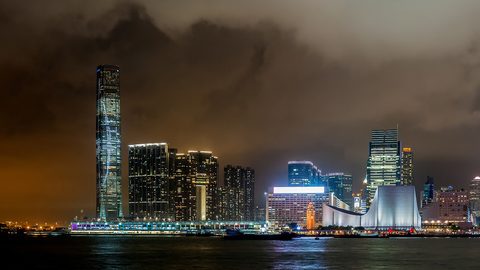 Hong Kong First Arrival Guide From Airport to Understanding the City
Hong Kong rewards those who treat it as a series of distinct neighbourhoods rather than a single city centre. Here is the geography and rhythm every newcomer needs.
Hong Kong First Arrival Guide From Airport to Understanding the City
Hong Kong rewards those who treat it as a series of distinct neighbourhoods rather than a single city centre. Here is the geography and rhythm every newcomer needs.
-
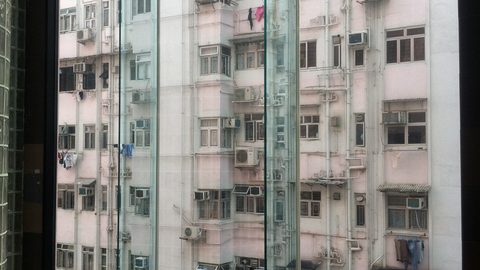 Hong Kong Hotels and Serviced Apartments Before a Lease
Serviced apartments in Wan Chai, Kennedy Town, and Sai Ying Pun compared for the six weeks before you sign a Hong Kong lease.
Hong Kong Hotels and Serviced Apartments Before a Lease
Serviced apartments in Wan Chai, Kennedy Town, and Sai Ying Pun compared for the six weeks before you sign a Hong Kong lease.
-
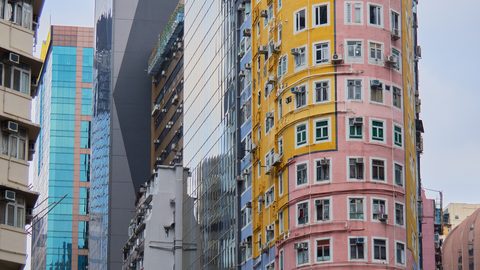 Where to Stay in Hong Kong a Shortlist of Districts Compared Honestly
Hong Kong districts vary wildly in rent, space, and commute reality. This shortlist compares where to stay based on what you actually get for your money.
Where to Stay in Hong Kong a Shortlist of Districts Compared Honestly
Hong Kong districts vary wildly in rent, space, and commute reality. This shortlist compares where to stay based on what you actually get for your money.
-
 Hong Kong Flights, HKG Airport and the Airport Express
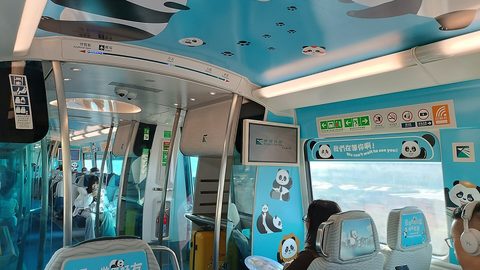
HKG to Central or Kowloon by Airport Express, taxi, or A-bus, plus how Hong Kong's in-town check-in makes it a strong flight hub.
Hong Kong Flights, HKG Airport and the Airport Express
HKG to Central or Kowloon by Airport Express, taxi, or A-bus, plus how Hong Kong's in-town check-in makes it a strong flight hub.
-
 Sai Ying Pun vs Kennedy Town Hong Kong Two Stops Apart at the Island's Value End
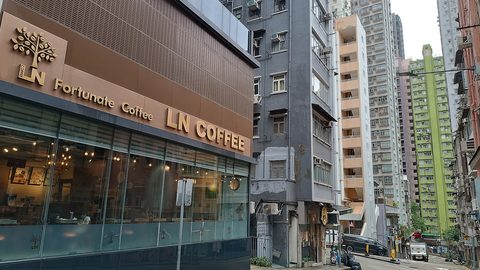
Sai Ying Pun and Kennedy Town sit two stops apart at Hong Kong Island's western end: one offers steep cafe streets and density, the other a waterfront promenade and sunset calm.
Sai Ying Pun vs Kennedy Town Hong Kong Two Stops Apart at the Island's Value End
Sai Ying Pun and Kennedy Town sit two stops apart at Hong Kong Island's western end: one offers steep cafe streets and density, the other a waterfront promenade and sunset calm.
-
 Hong Kong Expat Cost of Living Broken Down by Lifestyle Tier
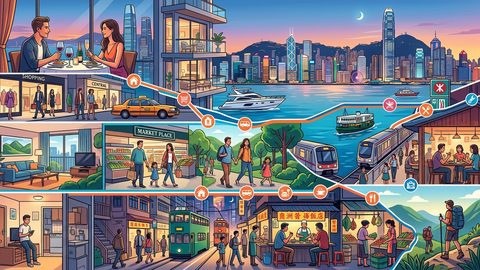
Real annual costs for expats in Hong Kong: budget, comfortable, and premium tiers covering rent by district, school fees, domestic helpers, and flights home.
Hong Kong Expat Cost of Living Broken Down by Lifestyle Tier
Real annual costs for expats in Hong Kong: budget, comfortable, and premium tiers covering rent by district, school fees, domestic helpers, and flights home.
-
 How to Set Up Your Finances When You First Arrive in Hong Kong
Open the right bank account, set up Octopus and FPS, and avoid costly transfer fees. A practical money setup guide for new arrivals in Hong Kong.
How to Set Up Your Finances When You First Arrive in Hong Kong
Open the right bank account, set up Octopus and FPS, and avoid costly transfer fees. A practical money setup guide for new arrivals in Hong Kong.