Sha Tin, the New Town Along the Shing Mun River That Delivers Square Footage
Sha Tin on the East Rail line is a planned new town with a riverside cycle track, the Ten Thousand Buddhas Monastery stair climb, and a glimpse of Hong Kong life with real square footage.
- Flag
-

- ISO code
- HK
- Population
- 690,000
Sha Tin, the New Town Along the Shing Mun River That Delivers Square Footage
You have been walking for three days in Hong Kong and your shoulders are up around your ears. Every pavement is shoulder width. Every meal involves an elbow in your rib. The city is an electric shock of sensory overload, and it is magnificent, but you crave something. A straight line. A bench. A view that is not a tower block six feet away. This is where you take the East Rail line 17 minutes north to Sha Tin, the government planned new town that started in 1973 and now holds 692,806 people. The question is whether a planned satellite city feels like a housing estate on a spreadsheet, or something closer to how most Hong Kong families actually live. The answer is the latter, and it is worth the trip.
What Hong Kong’s Middle Class Bought When it Left Kowloon
Sha Tin was a draining board for population overflow when the government designated it a new town in 1973. The plan was simple: build enough flats, schools, and shops so people did not need to travel to Central every day. Fifty years later, it worked. The district's median household income sits at HKD 31,000, slightly above the territory wide figure. Over a third of adults hold post secondary degrees. The secondary schools are strong. This is not a commuter dormitory. It is a complete city.
For a visitor, the size difference is the first thing you feel. A typical three bedroom flat in Sha Tin runs 50 to 70 square metres of saleable area. On Hong Kong Island, the same budget buys around 35 to 50. The average private rent per square metre in 2025 was HKD 340 to 380 annually according to the Rating and Valuation Department, noticeably below the HKD 380 to 450 range on the island. The corridors are wider. The lifts arrive faster. The pavements do not require single file. Sha Tin translates the density of Hong Kong into something with breathing room.
How to Arrive and Move Around
Your approach matters. Do not treat it as a day trip from Tsim Sha Tsui where you rush back for a dinner booking. Arrive by mid morning. Take the East Rail line from Admiralty. The journey is 17 minutes on a train that runs every 2.5 to 3 minutes during peak hours. Get off at Sha Tin Station. Exit through the concourse directly into the covered walkway network, which stretches 2.5 kilometres through the town centre and connects every major mall. You will not walk on an open road for the entire afternoon if you do not want to.
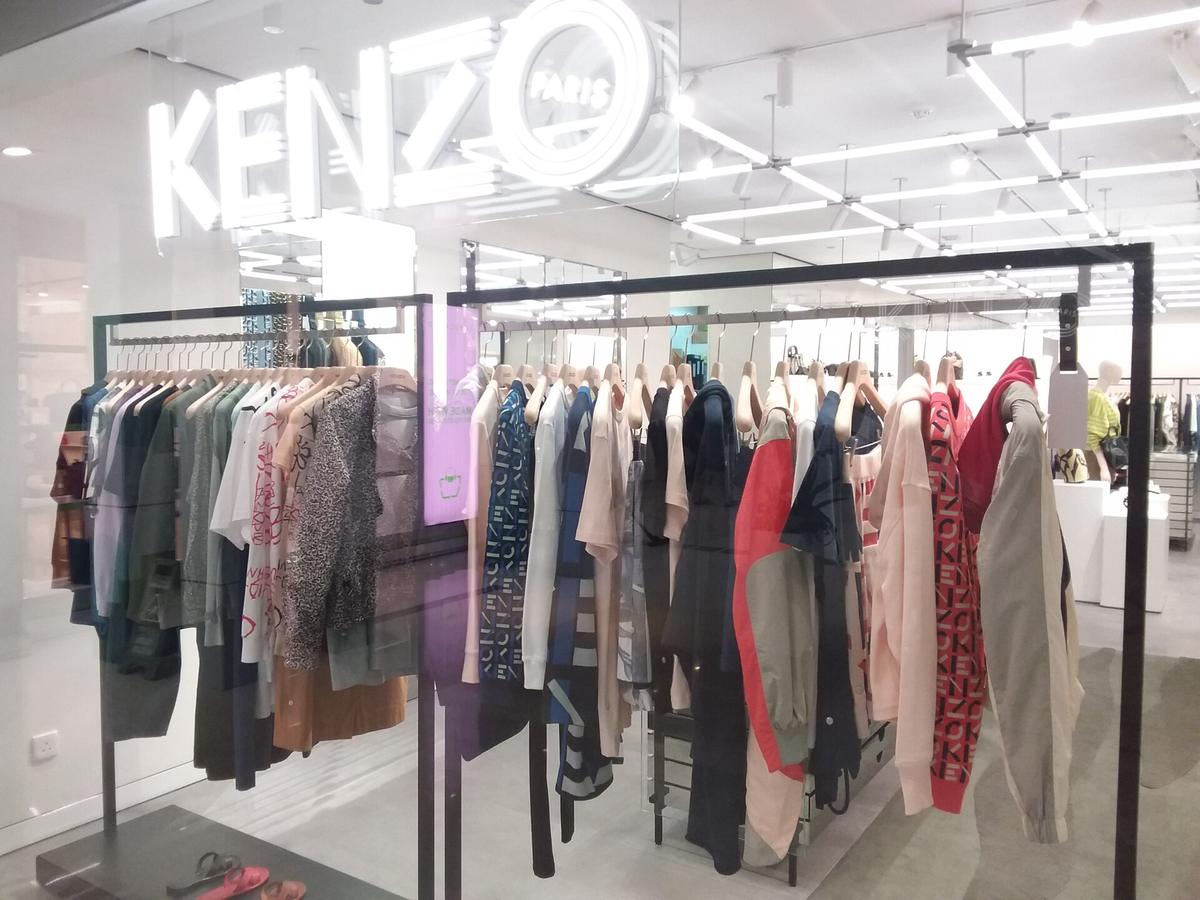

New Town Plaza: the Shopping Podium as Town Square
New Town Plaza opened in 1984 with 130,000 square metres of gross floor area. It has since expanded across four phases to 200,000 square metres total, housing over 350 shops. In 2023 it recorded 50 million visits per year. This is not a mall. It is the civic centre. The ground floor atrium hosts community events, pop up markets, and children's performances. The upper levels contain the usual Hong Kong mix of international brands, electronics chains, and bubble tea stalls, but the architecture matters more than the stores. The covered walkways extend to Citylink Plaza, HomeSquare, and Grand Central Plaza without crossing a single street. You can move through the entire commercial heart of Sha Tin under shelter, which matters in the wet season between July and September.
Where to Eat and Sit
Avoid the food court on the middle floors. The standard chains there are identical to every other mall in Hong Kong. Instead, head to the basement level where the local bakery chains sell egg tarts still warm from the oven, and the small counter serve rice rolls with peanut sauce for under HKD 20. The rooftop garden is free and offers a view of the Shing Mun River and the surrounding foothills. Sit there for ten minutes. Watch the families. This is the ordinary Hong Kong that pictures of the Peak skyline do not show.
The Shing Mun River and the 12 Kilometre Cycle Path
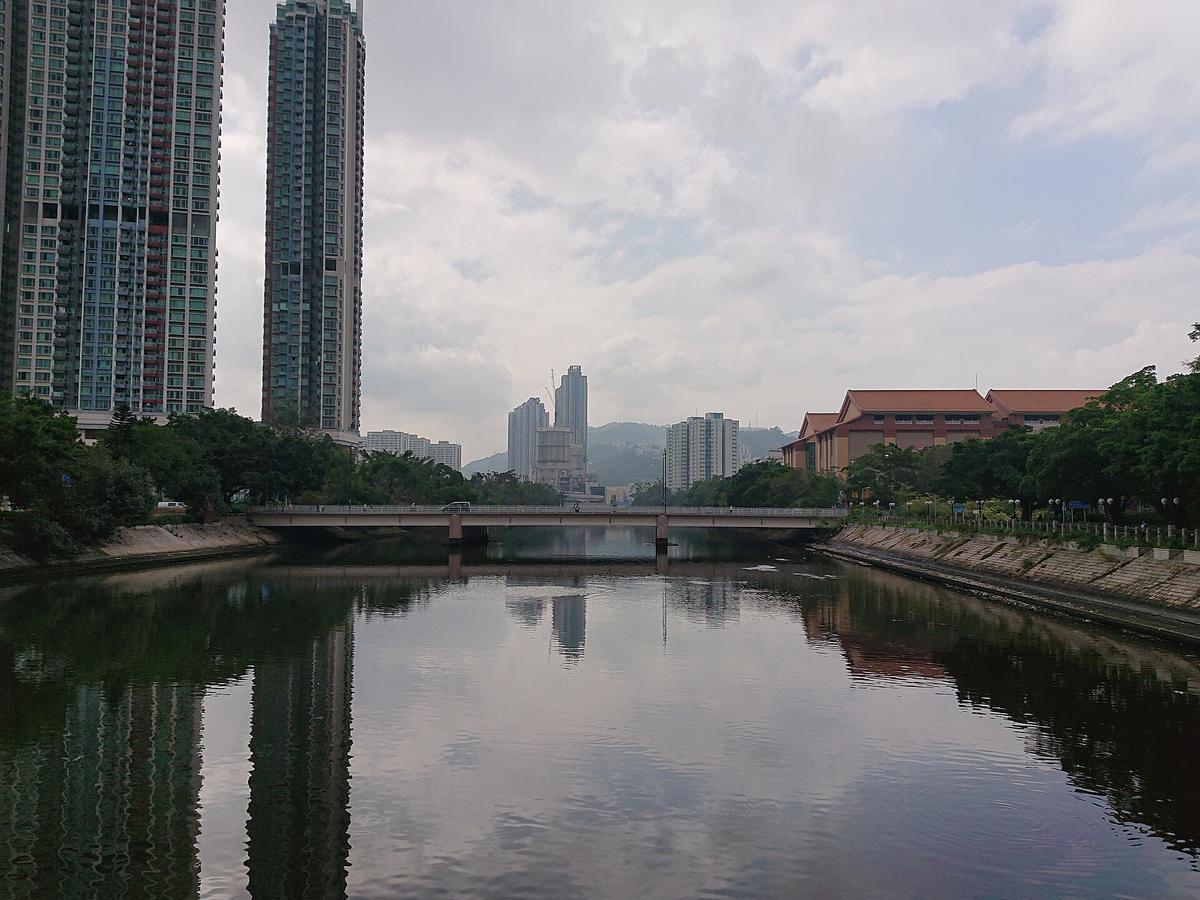
The Shing Mun River runs 7 kilometres from the hills to the sea, and both banks combined create 12 kilometres of concrete cycle path. This is the public amenity that most directly explains why Sha Tin works. Families cycle here on Sunday mornings. Couples walk their dogs. Teens sit on the banks with takeaway coffee in the late afternoon. The cycle path starts at the sewage treatment works in the south and runs north to Tai Po Road. That is where you should start your walk or ride, heading north from the treatment works toward the Tai Wai end where the river widens.
Riding and Walking the Loop
Bicycle rental costs HKD 30 to 60 per hour in 2025. The path is flat and paved. The main hazard is the occasional cyclist with no awareness of traffic flow. Ride at a relaxed pace. Stop at the bridges and watch the dragon boat teams practice on weekends. The path ends near the Sha Tin Racecourse, which opened in 1978 and holds 85,000 spectators. On non race days the infield park, Penfold Park, opens free to the public from 09:00 to 17:00. It is a flat patch of grass with ducks. Children run there. The racecourse's annual Hong Kong International Races fall on the second Sunday of December, with HKD 118 million in prize money. That day is chaos. Skip it unless you came specifically for the racing.
Ten Thousand Buddhas Temple: 431 Steps to 12,800 Statues
This is the main visitor draw in Sha Tin. The temple was founded in 1950 and sits at 120 metres above sea level. The approach requires climbing 431 steps. Do not attempt it during the midday heat between June and September. Arrive by 08:30, take the footbridge from Sha Tin Station, and begin the climb before it hits 30 degrees Celsius. The steps are lined with life sized golden Buddha statues, each in a different pose. There are 12,800 statues total inside the complex. The main hall contains a 15 metre tall seated Buddha surrounded by thousands of smaller figurines. The conditions are tight. You shuffle through narrow corridors packed with statuary. It is not a serene temple experience. It is a visual assault in the best way.
Access is free. No ticket required. The temple closes at 17:30, but aim to be done by 11:00 when the tour groups arrive. The summit offers a view across the Shing Mun River toward the foothills of the Pat Sin Leng range. You can see the new town laid out below as a grid of buildings against green. That view is the whole point of the trip.
Che Kung Temple and the Racecourse Loop
Che Kung Temple sits a 15 minute walk from Che Kung Temple Station, one stop east of Sha Tin Station on the East Rail line. The temple is dedicated to a Song dynasty general who became a folk deity for protection. It is compact. You will spend 20 minutes inside unless you queue to turn the large prayer wheel at the centre. On Chinese New Year the temple becomes one of the busiest in Hong Kong. Avoid that window entirely. The queue wraps around the block and the incense smoke is thick enough to trigger respiratory issues. Visit on a weekday afternoon instead. The Taoist fortune telling stalls outside the main hall cost around HKD 50 for a reading. They are lower quality than what you find at Wong Tai Sin across the harbour. Skip them and walk the outer ring toward the racecourse instead.
Walk the Perimeter Loop
The racecourse itself is visible from the temple grounds on the non race day side. You can walk the perimeter path in 25 minutes. It is a quiet loop with views toward the hills. Do this after the temple climb and before the river path walk. The three sites form a natural afternoon circuit: temple, racecourse, river.
- New Town Designation: 1973
- District Population (2021 Census): 692,806
- East Rail Travel Time to Admiralty: 17 minutes
- New Town Plaza Annual Footfall (2023): 50 million
- Shing Mun River Cycle Path Length: 12 km
- Ten Thousand Buddhas Temple Steps: 431
- Ten Thousand Buddhas Temple Altitude: 120 m
- Average Private Rent per m² (2025): HKD 340, 380 annually

The Practical Difference Between Sha Tin and Kowloon
The core insight about Sha Tin is spatial. A typical household in the district lives in 2.8 persons per dwelling, compared to 2.5 on Hong Kong Island, but the flats are 10 to 20 square metres larger. That extra square footage changes how people use their homes. Dining tables exist. Separate bedrooms for children are normal. The corridor in a Sha Tin public housing block is wide enough for two people to pass without turning sideways. In a Kowloon tenement building from the 1960s, the corridor forces single file.
Learn the Contrast Physically
Your visit should teach you this difference physically. Walk from Sha Tin Station to the river via the covered walkway. Notice the gap between buildings. Notice the visible sky. Then take the East Rail line back to Hung Hom, walk from that station to the Hong Kong Science Museum, and compare the pavement widths, the building gaps, and the noise levels. The contrast is the lesson.
What to Skip and What to Book
Skip the organised tour packages that bundle Sha Tin with a dim sum lunch in a chain restaurant. The quality is poor and the schedule is inflexible. Do not book a race day visit unless you specifically want to watch horse racing. The Hong Kong International Races in December draw a huge crowd and everything is overpriced. Skip the fortune telling stalls outside Che Kung Temple. The quality is below what you get at Wong Tai Sin.
Book nothing for Sha Tin itself. The temple requires no ticket. The river path requires no permit. The mall is open to anyone. The only thing you should book is your lunch if you want a table at the better riverfront restaurants on a weekend afternoon. Call ahead or use the OpenRice app. Do that on the morning of your visit.
Take the 05:38 first train from Sha Tin Station on a weekday if you want the temple to yourself. The sun rises over the Pat Sin Leng range and the river is still. You will have the climb to yourself until 08:00. Bring a jacket. The air conditioning on the East Rail line is aggressive even in summer. After the temple, rent a bicycle from the stand near the sewage treatment works and ride the 12 kilometre loop north. End at New Town Plaza for an egg tart and an iced milk tea. Then take the 17 minute train back to Admiralty. You will have seen the domestic Hong Kong that the harbour skyline photos leave out, and you will understand why hundreds of thousands of families chose this.
Common Questions
Is Sha Tin worth visiting if I only have three days in Hong Kong?
No. Three days is too tight. Add a fourth day for Sha Tin or skip it. With four days, allocate one day each for Hong Kong Island, Kowloon, a day trip or hike, and a flex day. Use the flex day for Sha Tin.
How long should I spend in Sha Tin for a single visit?
Four to five hours. Arrive at 09:00, climb the temple first, walk the river path, browse New Town Plaza, and take lunch at one of the local restaurants in the mall basement. You can be back in Admiralty by 14:30.
What is the best way to get from Tsim Sha Tsui to Sha Tin?
Take the East Rail line from Hung Hom Station. The journey is 10 to 12 minutes. Hung Hom is one stop from Admiralty. Total travel time from Tsim Sha Tsui via the Tsuen Wan line interchange at Admiralty is about 25 minutes.
Is the Ten Thousand Buddhas Temple climb difficult?
It is 431 steps on a continuous ascent with no shade. If you have knee problems or low fitness, skip it. The temple is not accessible to wheelchairs. The climb takes 15 to 20 minutes at a moderate pace.
Where should I eat in Sha Tin that is not a chain restaurant?
The basement level of New Town Plaza has several independent bakeries and noodle counters. For a sit down meal, walk to the riverfront near the Citylink Plaza exit where local Cantonese restaurants serve claypot rice and steamed fish at prices 20 percent below Kowloon equivalents.
Read next
-
 Living in Sha Tin New Town Space and the East Rail Commute
Renting in Sha Tin means trading a longer East Rail commute for much larger flats in new-town estates like City One and the riverside blocks near Fo Tan.
Living in Sha Tin New Town Space and the East Rail Commute
Renting in Sha Tin means trading a longer East Rail commute for much larger flats in new-town estates like City One and the riverside blocks near Fo Tan.
-
 Eating in Sha Tin New Town Plaza and the Village Restaurants
Beyond the chain restaurants of New Town Plaza, Sha Tin's best food is in the old village dai pai dong near Tai Wai and the riverside roast goose shops.
Eating in Sha Tin New Town Plaza and the Village Restaurants
Beyond the chain restaurants of New Town Plaza, Sha Tin's best food is in the old village dai pai dong near Tai Wai and the riverside roast goose shops.
-
 Hong Kong First Arrival Guide From Airport to Understanding the City
Hong Kong rewards those who treat it as a series of distinct neighbourhoods rather than a single city centre. Here is the geography and rhythm every newcomer needs.
Hong Kong First Arrival Guide From Airport to Understanding the City
Hong Kong rewards those who treat it as a series of distinct neighbourhoods rather than a single city centre. Here is the geography and rhythm every newcomer needs.
-
 Hong Kong Hotels and Serviced Apartments Before a Lease
Serviced apartments in Wan Chai, Kennedy Town, and Sai Ying Pun compared for the six weeks before you sign a Hong Kong lease.
Hong Kong Hotels and Serviced Apartments Before a Lease
Serviced apartments in Wan Chai, Kennedy Town, and Sai Ying Pun compared for the six weeks before you sign a Hong Kong lease.
-
 Where to Stay in Hong Kong a Shortlist of Districts Compared Honestly
Hong Kong districts vary wildly in rent, space, and commute reality. This shortlist compares where to stay based on what you actually get for your money.
Where to Stay in Hong Kong a Shortlist of Districts Compared Honestly
Hong Kong districts vary wildly in rent, space, and commute reality. This shortlist compares where to stay based on what you actually get for your money.
-
 Hong Kong Flights, HKG Airport and the Airport Express
HKG to Central or Kowloon by Airport Express, taxi, or A-bus, plus how Hong Kong's in-town check-in makes it a strong flight hub.
Hong Kong Flights, HKG Airport and the Airport Express
HKG to Central or Kowloon by Airport Express, taxi, or A-bus, plus how Hong Kong's in-town check-in makes it a strong flight hub.
-
 Tai Po vs Sha Tin Hong Kong New Town Comparison for Living
Decide between Sha Tin's polished malls and Tai Po's old market character with this direct comparison of two East Rail Line new towns in Hong Kong.
Tai Po vs Sha Tin Hong Kong New Town Comparison for Living
Decide between Sha Tin's polished malls and Tai Po's old market character with this direct comparison of two East Rail Line new towns in Hong Kong.
-
 Hong Kong Expat Cost of Living Broken Down by Lifestyle Tier
Real annual costs for expats in Hong Kong: budget, comfortable, and premium tiers covering rent by district, school fees, domestic helpers, and flights home.
Hong Kong Expat Cost of Living Broken Down by Lifestyle Tier
Real annual costs for expats in Hong Kong: budget, comfortable, and premium tiers covering rent by district, school fees, domestic helpers, and flights home.
-
 How to Set Up Your Finances When You First Arrive in Hong Kong
Open the right bank account, set up Octopus and FPS, and avoid costly transfer fees. A practical money setup guide for new arrivals in Hong Kong.
How to Set Up Your Finances When You First Arrive in Hong Kong
Open the right bank account, set up Octopus and FPS, and avoid costly transfer fees. A practical money setup guide for new arrivals in Hong Kong.