Tai Po or Sha Tin: Which East Rail Line New Town Matches Your Hong Kong Life
Decide between Sha Tin's polished malls and Tai Po's old market character with this direct comparison of two East Rail Line new towns in Hong Kong.

Tai Po or Sha Tin: Which East Rail Line New Town Matches Your Hong Kong Life
The single most useful fact for deciding between these two East Rail new towns is this: Sha Tin gives you a climate-controlled, covered walkway from the MTR station through five malls and into a master planned estate, while Tai Po gives you a wet market older than the electric light and a direct cycling path to a country park four times the size of Sha Tin's largest reserve. The axis is not price. Both new towns rent in the same HKD 18,000 to 25,000 band for private housing in 2024. The axis is how you want the city to meet you every day.
Sha Tin is the polished, mall-centric new town built around a choreographed urban experience. Tai Po is the grittier, older market town that keeps its elbows out. Both sit on the East Rail line. Sha Tin reaches Central in 24 to 28 minutes. Tai Po Market station adds 8 to 10 more minutes to Admiralty. The real difference is what happens when you step out of those stations.
Sha Tin: the Managed Urban Experience
The Covered Walkway Network
Leave Sha Tin station and walk north through New Town Plaza Phase I. You can continue under cover for 1.2 kilometres through HomeSquare and Citylink Plaza to City One without touching a single metre of open pavement. That covered walkway network is the defining feature of Sha Tin. It is a town designed for the Hong Kong summer: aggressive air conditioning, escalators, retail. The five malls in Sha Tin , New Town Plaza Phase I and III, HomeSquare, Citylink Plaza, Lucky Plaza , mean you can do your grocery shopping, your furniture shopping, and your weekend cinema trip without ever checking the weather forecast.
The Shing Mun River and Outdoor Life
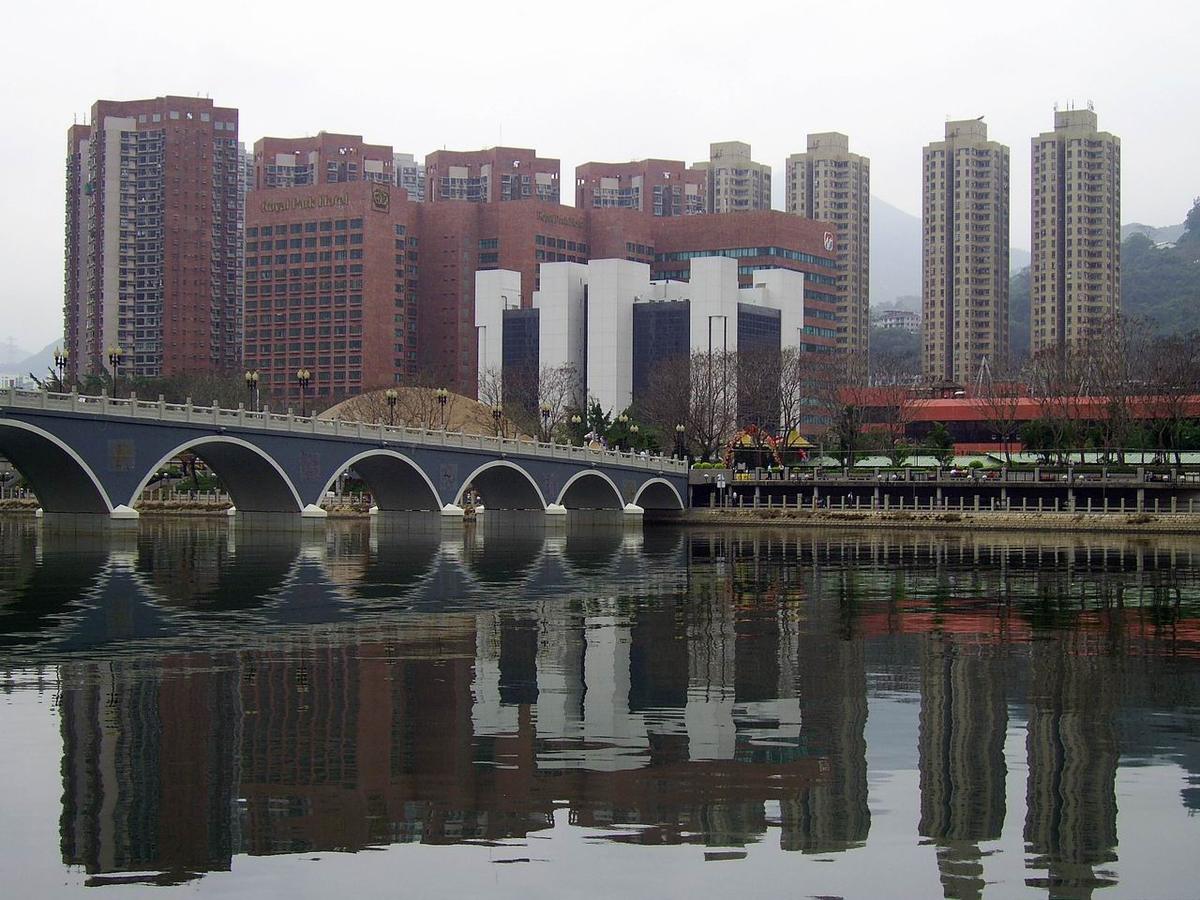
The Shing Mun River cuts through the district for 7 kilometres. The riverside promenade is where Sha Tin's outdoor life happens: joggers, cyclists, dog walkers, weekend fishing families. It is pleasant, wide, well maintained. But it is a curated version of nature, a green corridor inside a planned town. The Ten Thousand Buddhas Monastery sits on a hillside above the river. The climb is steep. It takes about 20 minutes from the Sha Tin station exit. The reward is golden statues cascading down the hillside and a view over the entire new town. Arrive before 10:00 to avoid the tour groups that fill the stairway by midday.
Who Lives Here
Sha Tin's resident profile leans heavily toward families with school age children and expatriates living in private estates near the MTR. It has five international schools and 38 aided or government primary schools. The village house supply is limited to roughly 2,500 units across 48 recognised villages. You are not moving to Sha Tin for a three storey house with a rooftop garden. You are moving to Sha Tin for a 350 to 550 square foot flat with the mall on the ground floor, the MTR three minutes from your lobby, and a predictable, efficient daily rhythm.
Tai Po: the Organic, Village-Rooted Alternative
The Old Market Heart
Tai Po is older, messier, and more interesting. The original market town, Tai Po Hui, was established in 1672. The Fu Shin Street Market has been operating on the same site since 1892. That is not a heritage restoration. It is a working wet market where vendors still slaughter live poultry in the morning and where you buy your vegetables from the same families who sold them to your neighbours' parents. The covered walkway network is limited to approximately 0.3 kilometres, essentially the footbridge from Tai Po Market station into Tai Po Mega Mall. You will walk in the rain here. That is part of the arrangement.
Space and Village Houses
What you gain is space. Tai Po private housing rents in the same HKD 18,000 to 25,000 band as Sha Tin, but for 450 to 700 square feet. That is extra square footage for the same money. And that is only the flat market. Tai Po has approximately 17,000 village house units across 133 recognised villages. The village house supply is the real draw. For the same rent as a two bedroom flat in Sha Tin, you can rent an entire three storey village house in Tai Po with outdoor space, a view of Pat Sin Leng, and a parking spot for a bicycle.
Country Parks at Your Door
The outdoor access is Sha Tin's equal and then some. Tai Po sits at the edge of Plover Cove Country Park, which covers 45.94 square kilometres. Pat Sin Leng Country Park adds another 31.25 square kilometres. Tai Po Kau Nature Reserve, at 4.6 square kilometres, is a protected woodland where you can hear birdsong within a ten minute walk from the station. The Tai Po Waterfront Park is a 22 hectare reclaimed site with a cycling track, a model boat pond, and a lookout tower. Ride a bicycle from your village house to Plover Cove, swim at the beach, and cycle back to the Fu Shin Street Market for a claypot rice dinner. That is not a weekend plan. That is a Tuesday after work.
The Trade-Off is Simple
Sha Tin wins on convenience and predictability. Tai Po wins on space and character. The Sha Tin resident is a professional with a young family who values the covered walkway, the five international schools, and the 38 aided primary schools within a short bus ride. The Tai Po resident is someone who cycles, who wants a larger floor area, who rents a village house, and who prefers a wet market to a mall food court. Sha Tin's country parks, Lion Rock and Ma On Shan, are smaller and more crowded. Tai Po's country parks are larger, less trafficked, more diverse.
The friction points are real. Tai Po's limited covered walkway means you need an umbrella in your bag at all times. The wet market culture means you deal with noise, smell, and the occasional stray cat. Sha Tin's mall centric layout can feel sterile. You can live in Sha Tin for a year and never learn the name of a single shopkeeper. That is hard to avoid in Tai Po, where the same stallholder sells you eggs for six months and eventually asks about your mother.

Worth it if
- Tai Po: Larger living spaces for the same rent as Sha Tin, plus 17,000 village house units that are simply not available in Sha Tin.
- Tai Po: Direct access to Plover Cove and Pat Sin Leng country parks, totalling 77.19 km² of hiking and cycling terrain, vs Sha Tin's 34.37 km².
- Tai Po: Authentic market town character from the 1672 Tai Po Hui, with a working wet market from 1892 that no mall can replicate.
- Sha Tin: 1.2 km of continuous covered walkway from the MTR station through five malls, a decisive advantage in Hong Kong's summer humidity and rain.
- Sha Tin: Shorter commute to Central at 24-28 minutes, versus Tai Po's 32-37 minutes, plus a richer selection of nearby international schools.
Skip it if
- Tai Po: Limited covered walkway network at only 0.3 km means you will spend more time exposed to weather during daily errands.
- Tai Po: Grittier market town environment with noise, smell, and older infrastructure that not everyone finds charming.
- Sha Tin: Smaller flats for the same money, with typical floor areas of 350-550 sq ft versus 450-700 sq ft in Tai Po.
- Sha Tin: Mall-centric living can feel anonymous and curated; the organic street life of Tai Po Hui does not exist here.
The Verdict
Pick Sha Tin if you want a managed urban experience where the mall is your living room and the river is your garden. Pick Tai Po if you want a village rooted life where the country park is your backyard and the wet market is your pantry. Sha Tin is the better choice for families who prioritise school access and a weatherproof daily routine. Tai Po is the better choice for anyone who wants a larger space, a village house, a cycling lifestyle, and a connection to Hong Kong's older, messier, more honest character.
The honest caveat: Tai Po's grittiness is not for everyone. If the idea of walking through a wet market where fishmongers keep their stock alive in buckets makes you uncomfortable, Tai Po will wear on you. If the idea of another air conditioned mall corridor makes you want to scream, Sha Tin will feel like a trap. That is the axis. Both are good. One is right for you.
Common Questions
Which new town has the better commute to Central?
Sha Tin. The East Rail line takes 24 to 28 minutes from Sha Tin station to Central. Tai Po Market station adds 8 to 10 minutes to Admiralty. The door to door difference is about 10 minutes each way.
Can I get a village house in Sha Tin?
Not easily. Sha Tin has about 2,500 village house units across 48 recognised villages. Tai Po has 17,000 units across 133 villages. If you want a village house, pick Tai Po.
Which town is better for cyclists?
Tai Po. The waterfront park connects to a cycling track that leads into Plover Cove Country Park. The terrain is flatter. Sha Tin's Shing Mun River path is pleasant but shorter at 7 km.
Is Tai Po still cheaper than Sha Tin?
Not for private flats. Both new towns rent in the HKD 18,000 to 25,000 band in 2024. Tai Po gives you a larger flat for the same price. The real cost difference is in village house rentals, which are mostly in Tai Po.
Read next
-
 Hong Kong Expat Cost of Living Broken Down by Lifestyle Tier
Real annual costs for expats in Hong Kong: budget, comfortable, and premium tiers covering rent by district, school fees, domestic helpers, and flights home.
Hong Kong Expat Cost of Living Broken Down by Lifestyle Tier
Real annual costs for expats in Hong Kong: budget, comfortable, and premium tiers covering rent by district, school fees, domestic helpers, and flights home.
-
 How to Set Up Your Finances When You First Arrive in Hong Kong
Open the right bank account, set up Octopus and FPS, and avoid costly transfer fees. A practical money setup guide for new arrivals in Hong Kong.
How to Set Up Your Finances When You First Arrive in Hong Kong
Open the right bank account, set up Octopus and FPS, and avoid costly transfer fees. A practical money setup guide for new arrivals in Hong Kong.
-
 Mobile Plans, SIM Cards and Connectivity Costs for Expats in Hong Kong
Compare 3HK, SmarTone, and CMHK mobile plans for Hong Kong expats. Monthly costs, data tiers, prepaid vs contract, and tips on staying connected abroad.
Mobile Plans, SIM Cards and Connectivity Costs for Expats in Hong Kong
Compare 3HK, SmarTone, and CMHK mobile plans for Hong Kong expats. Monthly costs, data tiers, prepaid vs contract, and tips on staying connected abroad.
-
 Where Hong Kong Expats Actually Spend Their Evenings and Weekends
How expats in Hong Kong actually spend their free time. Hiking groups, waterfront bars, beach clubs, and the Happy Valley racing ritual with real costs.
Where Hong Kong Expats Actually Spend Their Evenings and Weekends
How expats in Hong Kong actually spend their free time. Hiking groups, waterfront bars, beach clubs, and the Happy Valley racing ritual with real costs.