Tai Po, Where a Hong Kong Market Town Still Feels Like One, Backed by Country Parks
Tai Po combines a functioning old market town, a waterfront park on Tolo Harbour, and direct access to Plover Cove Country Park on the eastern New Territories edge.
- Flag
-

- ISO code
- HK
- Population
- 320,000
Tai Po Market Town Hong Kong Guide: the New Town That Refused to Forget Its Market
The single most useful fact about Tai Po: you step off an East Rail line train at Tai Po Market stop, walk three minutes into Fu Shin Street, buy fresh-cut pork from a butcher whose family has worked that stall since the Qing Dynasty, then walk ten minutes in the opposite direction to reach a 22 hectare park on Tolo Harbour. No other Hong Kong new town lets you do that. The question is real: which 300,000 person planned town still functions like the market village it was before the towers went up? The answer is Tai Po. And the reason matters for anyone who wants to see how Hong Kong transitions from high rise density to country park ridge in a single walk.
Why Tai Po Feels Different from Sha Tin or Tseung Kwan O
Hong Kong built nine new towns from the 1970s onward. Most erased their older settlements. Sha Tin got the shopping malls and the racecourse. Tseung Kwan O got the grid of towers and little else. Tai Po got both: the 30 to 45 storey residential towers that house 60 percent of its population in public estates, and a low rise old market street that still operates as it did in the late 17th century.
The reason is geography. The new town development started in 1979, but the market at Fu Shin Street had been running for over two hundred years. The planners did not demolish it. They built around it. The result is a town with two walking rhythms. On the east side, near the MTR stops, you get covered footbridges, escalators, and climate controlled malls. On the west side, along Fu Shin Street and the narrow lanes that feed into it, you get open air stalls, awnings, wet concrete floors, and the smell of dried seafood and roasting chestnuts. The transition takes about four minutes on foot.
Village Law And The River Corridor
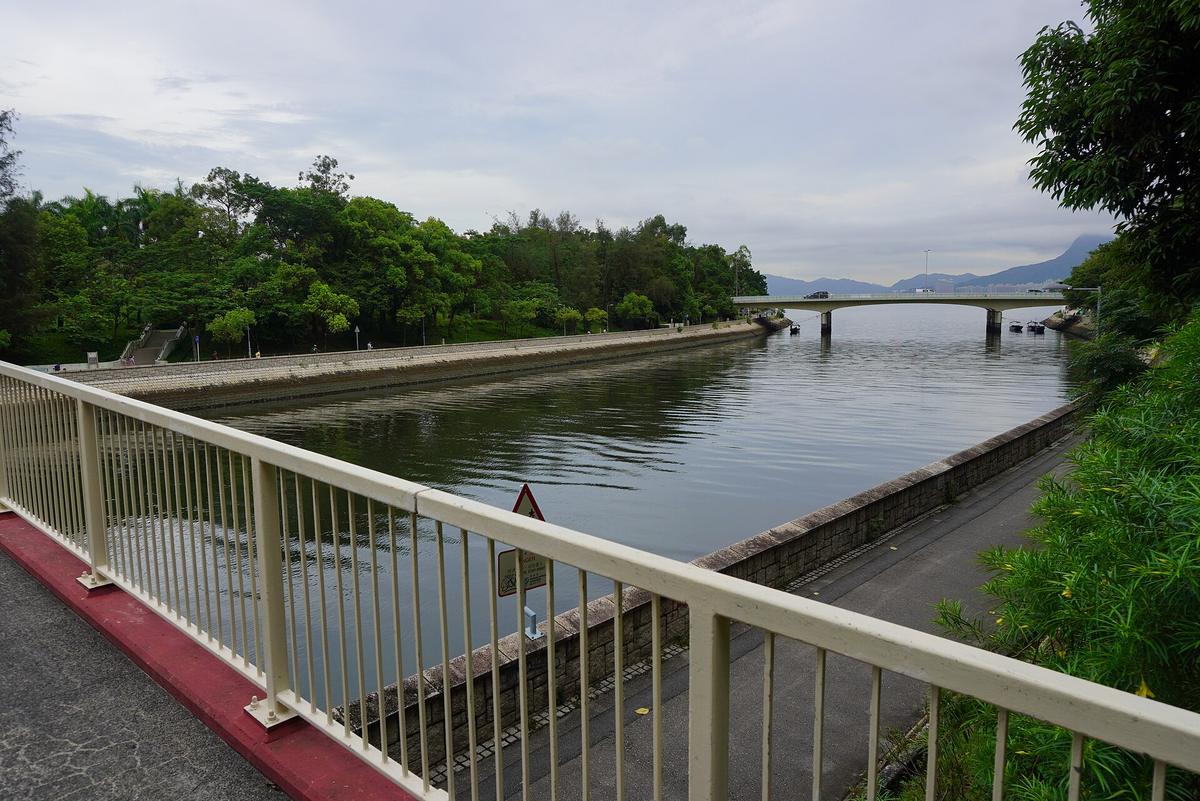
That contrast is structural. The village house regulations in the New Territories limit village houses to three storeys and 700 square feet per floor. Those houses sit within walking distance of towers that rise forty storeys. You see the scale change in real time. And because the Lam Tsuen River runs seven kilometres from Tai Mo Shan down through the town to Tolo Harbour, you get a natural corridor that keeps the high rises from feeling oppressive. The river walk is part of the commute for many residents.

What to Do in Tai Po: the Walk You Should Take
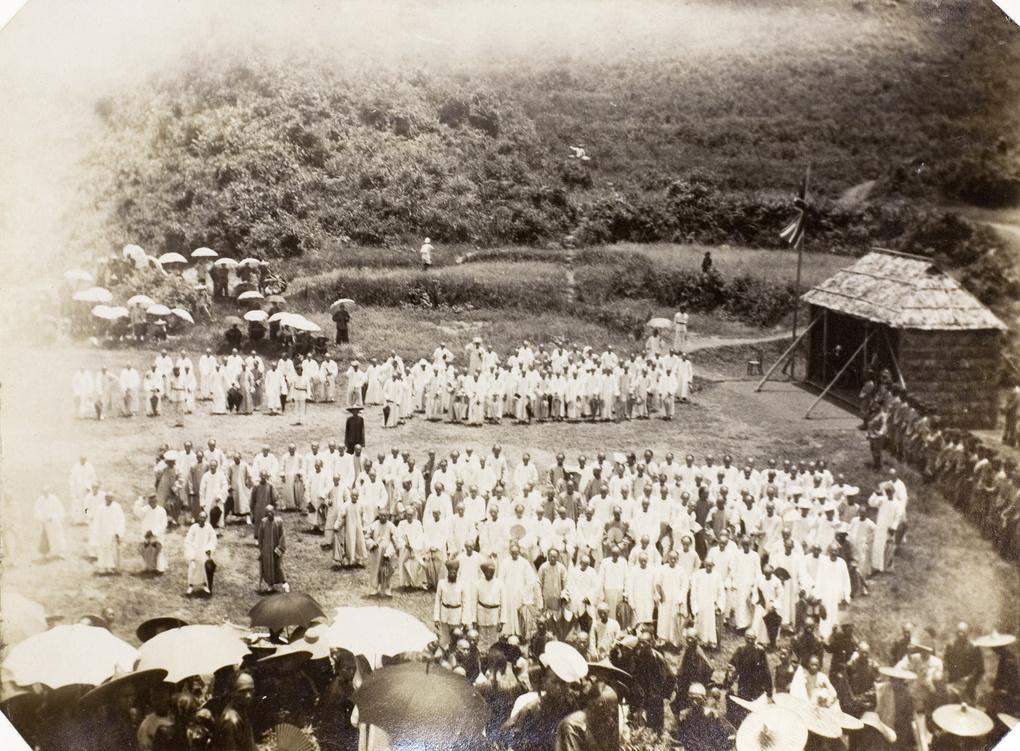
Start at Tai Po Market station. Use the west exit. Cross the footbridge over the Lam Tsuen River and drop down to Fu Shin Street. Arrive by 09:00. That is when the market is fully stocked and before the lunch crowd slows the narrow lane to a shuffle. Fu Shin Street is a traditional open air wet market. The stalls sell live poultry, fresh vegetables, tofu, dried fish, and Chinese medicine. The street runs about 200 metres. Walk it both ways.
Halfway down, on the right, you will find the Man Mo Temple, built in 1892 and declared a monument. It is small and incense filled. You do not need more than five minutes inside. The temple marks the historic centre of Tai Po Hui, the old market town. Before the railway arrived in 1910, when Tai Po Market stop opened as a halt on the then Kowloon Canton Railway, this temple was the most prominent building in the settlement.
From The Market To The Waterfront
Walk east back toward the river. Cross at the pedestrian bridge near the MTR stop and head for Tai Po Waterfront Park. The park opened in 1997 and covers 22 hectares of reclaimed land on Tolo Harbour. The main feature is the spiral lookout tower, 32 metres high. Climb it. The view takes in the harbour channel, the Pat Sin Leng ridge to the north, and the towers of the new town behind you. The park has jogging paths, a bicycle track, and a large lawn. It is not a destination in itself. It is the space that lets you see the whole arrangement: water, country park, new town, old market.
Into The Country Park On Foot
From the park, you can see Plover Cove Country Park directly behind the town. The country park covers 4,594 hectares and was designated in 1978, the same year as the neighbouring Pat Sin Leng Country Park. The reservoir inside it, Plover Cove, was built between 1960 and 1968 by damming a sea inlet. It holds 230 million cubic metres of water. The hiking trails start from the edge of Tai Po. You do not need a bus to reach them. Walk to the end of the park, follow the path up the hill, and you are in the country park within fifteen minutes.
Lam Tsuen Wishing Tree and the Cultural Layer
About two kilometres inland from the market, in the village of Lam Tsuen, stands the Wishing Tree. This is a cultural stop, not a nature stop. The tree is a banyan. Visitors write wishes on paper, tie them to a weighted orange, and throw the orange into the tree's branches. If the orange stays caught, the wish is said to come true. The practice was popular enough that the original tree had to be protected from overloading. A replica tree now takes the throws. Arrive before 11:00 to avoid the tour groups that arrive by coach from the city. The site is free. Budget 20 minutes.
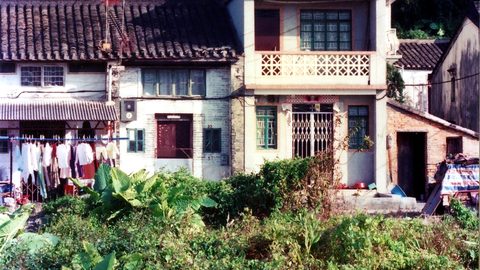
The Lam Tsuen area also has several village houses that show the indigenous villager housing system. Under New Territories law, male descendants of recognised village families can build a house of up to three storeys on village land. The houses are concrete, tiled, and uniform in size. They sit among newer low rise apartment blocks. The contrast is part of the Tai Po story. The new town absorbed the villages but did not erase their land rights.
Getting To Tai Po And Getting Around
Take the East Rail line from Admiralty. The train runs every four minutes in peak hours. Tai Po Market stop is 31 minutes from Admiralty. Tai Wo, further north, is 33 minutes. Use Tai Po Market for the old market and the waterfront. Use Tai Wo if you are heading directly for the Plover Cove hiking trails. Sha Tin is six minutes south of Tai Po Market and eight minutes south of Tai Wo. Those journey times hold in normal service. The line continues north to Lo Wu (18 minutes from Tai Po Market) and Lok Ma Chau (20 minutes), both border crossings into mainland China.
Coming from Hong Kong Island, budget 45 minutes door to door from Central. That is shorter than the trip to Sai Kung and much shorter than the ferry to Cheung Chau. Tai Po is one of the most accessible day trips from the core districts. The 2021 census counted 316,470 people in the district, up from 303,926 in 2016. The population is close to the original planned target of 300,000. The town is effectively full. That is why the market still thrives. The density supports it.
| Metric | Sha Tin | Tai Po |
|---|---|---|
| Private residential rent per sq ft (2025) | HKD 35-45 | HKD 28-38 |
| Private sale price per sq ft (2025) | HKD 12,000-16,000 | HKD 10,000-14,000 |
| Typical private flat floor area (net) | 400-700 sq ft | 450-800 sq ft |
| MTR to Admiralty (fastest) | About 20 min | 31-33 min |
| Country park access | Shing Mun, 5 km south | Plover Cove, 0.5 km east |

The One Thing to Book Before You Go
Nothing. Tai Po does not require advance bookings for any of its main attractions. The market runs daily. The waterfront park is open all hours. The Wishing Tree has no ticket. The hiking trails are free. The only exception is a guided walk through Plover Cove Country Park, which the Hong Kong government runs on weekends and requires a registration on their site. Otherwise, buy an Octopus card at the airport, top it up, tap into the East Rail line at Admiralty, and get off at Tai Po Market. Walk west. That is the whole plan.
Common Questions
Is Tai Po good for a half day trip from Central?
Yes. Train from Admiralty to Tai Po Market takes 31 minutes. Spend 45 minutes on Fu Shin Street, 20 minutes at the Man Mo Temple, 30 minutes walking the waterfront park, and another 30 climbing the spiral lookout tower. Total walking time is under three hours. Add lunch in the market area and you are back on the train within five hours.
Can I hike directly from Tai Po without a bus?
Yes. Walk from the waterfront park east into Plover Cove Country Park. The trailhead is at the end of the park path, about 15 minutes on foot from the spiral tower. For longer hikes, take the 75K bus from Tai Po Market to the Plover Cove Reservoir dam. That cuts the walk to the main trails to under 10 minutes.
Does the market accept credit cards?
No. Fu Shin Street stalls are cash only. The nearest ATM is inside Tai Po Market station or at the HSBC branch on Kwong Fuk Road, a five minute walk west of the market. Carry small notes if you plan to buy food or ingredients.
When is the best time to visit the Wishing Tree?
Weekday mornings before 11:00. Tour buses arrive from the city around 10:30 and stay until 13:00. The site is free and small. Ten minutes is enough. Combine it with a walk through the Lam Tsuen village houses nearby.
Is Tai Po suitable for solo travellers?
Yes. The MTR connection is direct and frequent. The market and waterfront are safe and well lit. Solo dining is normal in the cooked food centres. The hiking trails are clearly marked and popular on weekends. Carry water and a local SIM for navigation.
Read next
-
 Living in Tai Po Hong Kong Market Town Village Houses and the Commute
A practical look at renting in Tai Po, from market town flats above the MTR to village houses in Lam Tsuen Valley and the daily commute to Central.
Living in Tai Po Hong Kong Market Town Village Houses and the Commute
A practical look at renting in Tai Po, from market town flats above the MTR to village houses in Lam Tsuen Valley and the daily commute to Central.
-
 Eating in Tai Po Market the Cooked Food Centre and Village Food
A guide to eating in Tai Po, from the legendary cooked food centre atop the Hui market to the village restaurants in Lam Tsuen and Tai Mei Tuk.
Eating in Tai Po Market the Cooked Food Centre and Village Food
A guide to eating in Tai Po, from the legendary cooked food centre atop the Hui market to the village restaurants in Lam Tsuen and Tai Mei Tuk.
-
 Hong Kong First Arrival Guide From Airport to Understanding the City
Hong Kong rewards those who treat it as a series of distinct neighbourhoods rather than a single city centre. Here is the geography and rhythm every newcomer needs.
Hong Kong First Arrival Guide From Airport to Understanding the City
Hong Kong rewards those who treat it as a series of distinct neighbourhoods rather than a single city centre. Here is the geography and rhythm every newcomer needs.
-
 Hong Kong Hotels and Serviced Apartments Before a Lease
Serviced apartments in Wan Chai, Kennedy Town, and Sai Ying Pun compared for the six weeks before you sign a Hong Kong lease.
Hong Kong Hotels and Serviced Apartments Before a Lease
Serviced apartments in Wan Chai, Kennedy Town, and Sai Ying Pun compared for the six weeks before you sign a Hong Kong lease.
-
 Where to Stay in Hong Kong a Shortlist of Districts Compared Honestly
Hong Kong districts vary wildly in rent, space, and commute reality. This shortlist compares where to stay based on what you actually get for your money.
Where to Stay in Hong Kong a Shortlist of Districts Compared Honestly
Hong Kong districts vary wildly in rent, space, and commute reality. This shortlist compares where to stay based on what you actually get for your money.
-
 Hong Kong Flights, HKG Airport and the Airport Express
HKG to Central or Kowloon by Airport Express, taxi, or A-bus, plus how Hong Kong's in-town check-in makes it a strong flight hub.
Hong Kong Flights, HKG Airport and the Airport Express
HKG to Central or Kowloon by Airport Express, taxi, or A-bus, plus how Hong Kong's in-town check-in makes it a strong flight hub.
-
 Tai Po vs Sha Tin Hong Kong New Town Comparison for Living
Decide between Sha Tin's polished malls and Tai Po's old market character with this direct comparison of two East Rail Line new towns in Hong Kong.
Tai Po vs Sha Tin Hong Kong New Town Comparison for Living
Decide between Sha Tin's polished malls and Tai Po's old market character with this direct comparison of two East Rail Line new towns in Hong Kong.
-
 Hong Kong Expat Cost of Living Broken Down by Lifestyle Tier
Real annual costs for expats in Hong Kong: budget, comfortable, and premium tiers covering rent by district, school fees, domestic helpers, and flights home.
Hong Kong Expat Cost of Living Broken Down by Lifestyle Tier
Real annual costs for expats in Hong Kong: budget, comfortable, and premium tiers covering rent by district, school fees, domestic helpers, and flights home.
-
 How to Set Up Your Finances When You First Arrive in Hong Kong
Open the right bank account, set up Octopus and FPS, and avoid costly transfer fees. A practical money setup guide for new arrivals in Hong Kong.
How to Set Up Your Finances When You First Arrive in Hong Kong
Open the right bank account, set up Octopus and FPS, and avoid costly transfer fees. A practical money setup guide for new arrivals in Hong Kong.