Village House or High Rise Living in Hong Kong
A practical guide to Village House or High Rise Living in Hong Kong.
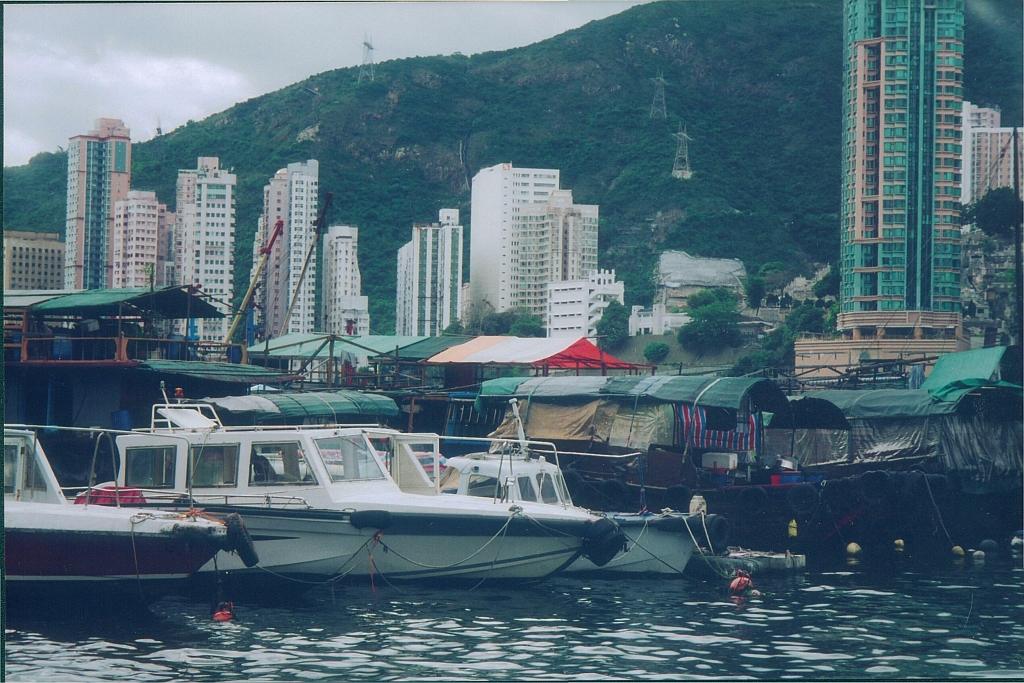

The two Hong Kongs
Hong Kong housing splits into two distinct worlds the moment you look beyond the skyline. On one side stand the residential towers that define the city in every postcard, self-contained vertical neighbourhoods where a lift ride replaces a street address. On the other, scattered across the New Territories, sit low-rise village houses that operate by an entirely different set of rules, shaped by a policy framework dating back to 1972.
The choice between these two forms of living is not simply a question of taste or budget. It is a decision about which version of Hong Kong you want to inhabit: the dense, serviced efficiency of the urban core, or the sprawling, self-reliant character of the former rural hinterland. Each path carries its own legal structure, infrastructure profile and daily rhythm, and understanding those differences before you sign a tenancy agreement can prevent an expensive mismatch.
What a village house actually is
A village house in Hong Kong is not merely any low-rise dwelling outside the urban area. The term refers specifically to a New Territories Exempted House built under the Small House Policy, introduced in December 1972. That policy grants a once-in-a-lifetime right to an indigenous male villager, someone descended through the male line from a recognised village resident as of 1898, to construct one small house on village land.
The statutory limits are precise. A legal village house must not exceed three storeys, a height of 8.23 metres, and a roofed-over area of 65.03 square metres per floor. These dimensions are fixed by the Lands Department, and they define the box within which every compliant village house sits. When you view a property that calls itself a village house, these are the maximums it was originally permitted to have.
What happens after construction is where risk enters the picture. Any additions or alterations that push the building beyond those statutory limits, an extra floor, an extended rooftop structure, a balcony enclosure, invalidate its exempted status. The work becomes an Unauthorised Building Work, and the Buildings Department holds the power to order its removal. A tenant who rents a village house with illegal extensions is not liable for the structure itself, but they may face disruption if an enforcement notice arrives during the tenancy.
The high-rise alternative
High-rise apartment living in Hong Kong is the product of a dense, regulated market where the Rating and Valuation Department classifies every private domestic unit by saleable area. The categories run from Class A, covering flats under 40 square metres, up to Class E for those of 160 square metres or above. This classification underpins the rental indices that track market movement, and in the final quarter of 2024 the average monthly rent on Hong Kong Island ranged from approximately HK$456 per square metre for the smallest units to around HK$435 per square metre for the largest. Kowloon equivalents sat lower, between roughly HK$398 and HK$378 per square metre.
What those per-square-metre figures do not capture is the bundled service layer that comes with most urban estates. Communal facilities typically include 24-hour security or concierge coverage, swimming pools, gymnasiums, clubhouses and shuttle bus services. These are not free amenities; they are funded through monthly management fees that generally fall between HK$1.90 and HK$5.00 per square foot of saleable area, with the exact figure depending on the estate's age and the breadth of its facilities.
For a tenant, this means the headline rent is only part of the monthly cost. Management fees, government rates and the practical question of whether you will use the pool enough to justify paying for it all factor into the comparison with a village house, where such charges are typically absent but so are the services they fund.
Infrastructure gaps that change daily life
Village houses in more remote parts of the New Territories can sit outside the reach of utilities that urban tenants take for granted. Some rely on septic tanks rather than mains drainage, which means waste management becomes a household responsibility rather than a municipal given. Electrical supply may be single-phase, potentially insufficient for running multiple high-load air-conditioning units simultaneously during the summer months. Fibre broadband is not universal: the Office of the Communications Authority operates a subsidy scheme targeting 235 remote villages for network extension, which tells you that coverage remains incomplete.
None of these limitations are guaranteed at any given property. A village house in a well-served area may have mains drainage, three-phase power and fibre already connected. The practical advice is straightforward: before committing to a lease, confirm the drainage type, check the electrical phase at the distribution board, and test the broadband speed or ask the current provider whether service is available at that specific address. The responsible authority for checking fibre rollout status is the Office of the Communications Authority, whose subsidy scheme page lists the villages covered.
The commute equation
Village houses cluster in the New Territories, and their connection to the rest of Hong Kong typically runs through a chain of village bus or green minibus services feeding into the MTR network. The distances are not vast in kilometres, but the time cost accumulates through waiting, interchanges and the final walk from the station. Sai Kung town, a popular area for village house rentals, sits roughly 20 minutes by minibus from Hang Hau MTR station, after which the journey to Central adds approximately another 35 minutes on the Tseung Kwan O line and the Island line.
That puts a Sai Kung-to-Central commute at something approaching an hour door-to-door under smooth conditions. A high-rise apartment on Hong Kong Island or in Kowloon can cut that figure dramatically, though at a higher rental cost per square metre. The tradeoff is not subtle: space and a lower per-square-foot price in exchange for a longer, multi-leg journey. MTR fares and minibus routes change over time, so current journey times and costs should be checked directly with the MTR Corporation journey planner and the Transport Department before making a decision tied to a specific address.
What the tenancy paperwork costs
Whether you choose a village house or a high-rise flat, the tenancy structure and its associated costs follow the same legal framework. The standard residential tenancy agreement in Hong Kong runs for two years, with a mutual break clause that becomes operable after the first 12 months. Exercising that clause typically requires one to two months' written notice.
Two upfront costs sit beyond the rent and deposit. Stamp duty on a two-year residential lease is calculated at 0.5% of the average yearly rent, payable within 30 days of signing, and is conventionally split equally between landlord and tenant. The standard estate agency commission for residential rentals is half a month's rent from the tenant and half a month's rent from the landlord, both payable upon signing the tenancy agreement.
Stamp duty rates and any applicable concessions can change through the annual Budget or by legislative amendment, so the current rate should be verified with the Inland Revenue Department before budgeting. The Rating and Valuation Department does not publish a dedicated village house rental index, meaning direct price comparison requires checking live listings on licensed agency platforms for the specific district and property type you are considering.
Making the call
The decision between a village house and a high-rise apartment is not a question with a universal answer. It is a weighing exercise where the factors are measurable but the weights are personal.
If your priority is space per dollar and you are willing to trade commute time, service infrastructure and on-site amenities for it, a village house can make sense, provided you verify the legal status of the structure, the utility connections and the realistic door-to-door journey before signing. If your priority is predictability, proximity and the convenience of a management office that handles maintenance, a high-rise unit in the urban area will deliver that at a higher cost per square metre and a smaller footprint.
The rental market as a whole has been trending upward: the all-class private domestic rental index reached 200.5 in December 2025, a year-on-year increase of 4.2% from 192.5 in December 2024. That trajectory does not favour one housing type over the other, but it does mean that locking in a two-year lease at a known rate carries a tangible value in a rising market. Whichever direction you lean, the protection comes from knowing exactly what you are renting, its legal standing, its physical limits and its true monthly cost, before the stamp duty is paid.
Sources and verification
- landsd.gov.hk — Research source checked for this guide
- landsd.gov.hk — Research source checked for this guide
- bd.gov.hk — Research source checked for this guide
- houseline.hk — Research source checked for this guide
- data.gov.hk — Research source checked for this guide
- executivehomeshk.com — Research source checked for this guide
Read next
-
 Hong Kong Hotels and Serviced Apartments Before a Lease
Serviced apartments in Wan Chai, Kennedy Town, and Sai Ying Pun compared for the six weeks before you sign a Hong Kong lease.
-
 Where to Stay in Hong Kong a Shortlist of Districts Compared Honestly
Hong Kong districts vary wildly in rent, space, and commute reality. This shortlist compares where to stay based on what you actually get for your money.
-
 Hong Kong Flights, HKG Airport and the Airport Express
HKG to Central or Kowloon by Airport Express, taxi, or A-bus, plus how Hong Kong's in-town check-in makes it a strong flight hub.
-
 Hong Kong Weekends Hiking Trails Island Day Trips and Visitor Itineraries
Hong Kong's best escapes are minutes from the MTR: ridge hikes with harbour views, car-free islands with seafood, and fishing villages on stilts reachable in under an hour.
-
 Best Time to Visit Hong Kong Weather Calendar and the Two Decisive Months
Hong Kong's best weather arrives from October to early December, with a secondary window in late March. Avoid Chinese New Year closures and the typhoon-prone summer.
-
 Getting Around Hong Kong MTR Octopus Minibuses and the Star Ferry
The MTR is the backbone of Hong Kong, but the Octopus card, minibuses, and exact-change rules on buses catch visitors out. Here is how to move without friction.
-
 Hong Kong School Districts and the Commute Tradeoffs for Families
A practical guide to Hong Kong School Districts and the Commute Tradeoffs for Families.
-
 Your First 30 Days in Hong Kong An Expat Setup Checklist
A practical guide to Your First 30 Days in Hong Kong An Expat Setup Checklist.
-
 A Digital Admin Checklist for Your First Week Living in Hong Kong
Set up mobile access, transport apps, government services and banking verification during your first week living in Hong Kong.