Hong Kong Stamp Duty on a Rental Agreement What Expats Actually Pay
A practical guide to Hong Kong Stamp Duty on a Rental Agreement What Expats Actually Pay.


What the stamp duty actually covers
Stamp duty on a Hong Kong tenancy agreement is a tax on the document itself, not a registration fee or a service charge. Under the Stamp Duty Ordinance, every party who signs the agreement is liable for the duty. That includes the landlord, the tenant, and any sub-tenant named in the document. The law does not assign the bill to one side. In practice, most landlords and tenants split the cost equally, but the two parties can agree on any division they choose before signing. The important point for a non-permanent resident is that liability follows the signature, not residency status. If your name is on the agreement, the obligation to stamp exists regardless of whether you hold a Hong Kong identity card or a foreign passport.
The stamp duty is calculated only on the rent payable. A rental deposit, however large, is excluded from the calculation. Any rent-free period written into the agreement also reduces the total rent figure used for the duty assessment, because the duty looks at the rent actually payable over the lease term rather than the headline monthly rate multiplied by the full number of months. This means a lease with a two-week rent-free period at the start will attract slightly less duty than an otherwise identical lease with no concession.
How the rate is determined
The rate depends on the lease term stated in the agreement. For a lease of one year or less, the duty is 0.25% of the total rent payable over the whole term. For a lease longer than one year but not exceeding three years, the rate rises to 0.5% of the yearly or average yearly rent. For any lease exceeding three years, the rate is 1% of the yearly or average yearly rent. These are the rates set by the Stamp Duty Ordinance. They apply uniformly to all tenants, whether permanent residents or newcomers on an employment visa.
When calculating the rent figure, the amount must be rounded up to the nearest HK$100. If the monthly rent is HK$22,050, for example, the calculation uses HK$22,100. This rounding rule applies at the stage of working out the yearly or total rent, not merely at the final duty figure. An additional fixed charge of HK$5 applies for each duplicate or counterpart of the agreement that needs stamping. If you and your landlord each want a stamped original, that extra HK$5 becomes relevant.
The 30-day deadline and what happens if you miss it
The Inland Revenue Department requires a tenancy agreement to be stamped within 30 days of the date it is executed, meaning the date all parties sign. The commencement date of the tenancy itself is irrelevant to this clock. An agreement signed on 5 June must be stamped by early July even if the lease does not start until August.
Missing the deadline triggers a penalty regime that escalates quickly. A delay of up to one month attracts a penalty of twice the stamp duty. A delay of more than one month but not more than two months raises the penalty to four times the duty. Any delay beyond two months incurs a penalty of ten times the duty. These are not administrative late fees in the ordinary sense. They are multiples of the tax itself and can turn a modest sum into a significant liability. The Inland Revenue Department also has the power to refuse an unstamped agreement as evidence in civil proceedings. No public officer or body corporate may act upon or file an unstamped agreement. For a tenant, this means the document offers no legal protection in a dispute until it is stamped.
Stamping without a Hong Kong identity card
Non-permanent residents who do not yet hold a Hong Kong identity card can complete the stamping process using their passport number. The official stamping request form, known as IRSD111, includes a field for a passport number as an alternative to an HKIC number. This removes a practical barrier that sometimes worries newcomers who assume the tax system is closed to anyone without a local ID.
The most direct route to stamping is the e-Stamping service available through the government portal. The service operates 24 hours a day and does not require you to present the original tenancy agreement in person. Once the online payment clears, a stamp certificate is issued instantly. The authentication methods and accepted payment options for e-Stamping are subject to change. Before applying, check the current list of supported identity verification methods and payment channels on the Inland Revenue Department website. The decision about which method to use depends on what digital identity tools you already have. A newcomer with only a passport and a foreign credit card may find one authentication path simpler than another, but the department publishes the current options and it is worth reviewing them immediately before starting the application rather than assuming a previously available method still works.
Splitting the cost with your landlord
Because the law does not dictate who pays, the division of stamp duty is a negotiation point that sits alongside the monthly rent and the repair clauses. In most Hong Kong tenancies, the parties pay equal shares. This custom is strong enough that many estate agents present it as a default term in the draft agreement. If you are asked to pay the full amount, you are not being asked to break any rule, but you are being asked to accept a departure from the common practice. Whether to agree depends on the overall bargain. A landlord who covers the full stamp duty may have priced that concession into a slightly higher rent. A tenant who insists on splitting it equally may find the landlord unwilling to budge on another term. The calculation itself is small enough in most residential leases that the difference between paying half and paying all is often less than the cost of a single grocery shop, but the principle of knowing where you stand matters more than the absolute sum.
Checking the current rates before you stamp
Stamp duty rates are set by legislation and can be amended. The figures quoted in any guide, including this one, reflect the rates at a specific point in time. Before you stamp an agreement, verify the current rates directly with the Inland Revenue Department. The department maintains a dedicated page on stamp duty rates that is the authoritative source. Relying on a rate quoted in a forum post or an old tenancy template carries the risk of underpaying and incurring a penalty, or overpaying without realising it. The verification step takes only a few minutes and removes the most avoidable error in the whole process.
Sources and verification
- ird.gov.hk — Research source checked for this guide
- clic.org.hk — Research source checked for this guide
- [gov.hk](https://www.gov.hk/en/residents/taxes/docs/IRSD123(E) — Research source checked for this guide
- ird.gov.hk — Research source checked for this guide
- ird.gov.hk — Research source checked for this guide
- gov.hk — Research source checked for this guide
Read next
-

 Hong Kong Hotels and Serviced Apartments Before a Lease
Serviced apartments in Wan Chai, Kennedy Town, and Sai Ying Pun compared for the six weeks before you sign a Hong Kong lease.
-
 Where to Stay in Hong Kong a Shortlist of Districts Compared Honestly
Hong Kong districts vary wildly in rent, space, and commute reality. This shortlist compares where to stay based on what you actually get for your money.
-
 Hong Kong Flights, HKG Airport and the Airport Express
HKG to Central or Kowloon by Airport Express, taxi, or A-bus, plus how Hong Kong's in-town check-in makes it a strong flight hub.
-
 Hong Kong Weekends Hiking Trails Island Day Trips and Visitor Itineraries
Hong Kong's best escapes are minutes from the MTR: ridge hikes with harbour views, car-free islands with seafood, and fishing villages on stilts reachable in under an hour.
-
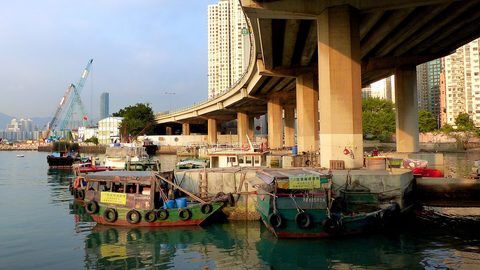 Best Time to Visit Hong Kong Weather Calendar and the Two Decisive Months
Hong Kong's best weather arrives from October to early December, with a secondary window in late March. Avoid Chinese New Year closures and the typhoon-prone summer.
-
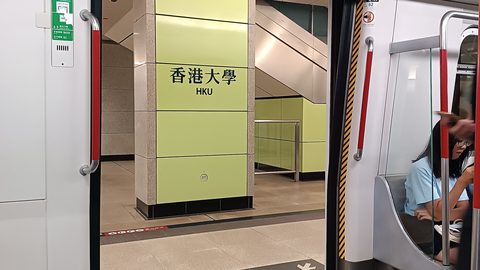 Getting Around Hong Kong MTR Octopus Minibuses and the Star Ferry
The MTR is the backbone of Hong Kong, but the Octopus card, minibuses, and exact-change rules on buses catch visitors out. Here is how to move without friction.
-
 Negotiating a Diplomatic Break Clause in a Hong Kong Lease
A practical guide to Negotiating a Diplomatic Break Clause in a Hong Kong Lease.
-
 Getting Your MPF Money Out When You Leave Hong Kong for Good
A practical guide to Getting Your MPF Money Out When You Leave Hong Kong for Good.
-
 Filing Your First Hong Kong Tax Return as an Expat Without an Accountant
A practical guide to Filing Your First Hong Kong Tax Return as an Expat Without an Accountant.