Your Boss and the T8 Work Expectations on a Hong Kong Typhoon Day
A practical guide to Your Boss and the T8 Work Expectations on a Hong Kong Typhoon Day.

What the official guidance actually says
The starting point for understanding your rights on a Hong Kong typhoon day is the Labour Department's Code of Practice in Times of Adverse Weather and "Extreme Conditions." This document is not a piece of legislation and carries no direct legal force. However, courts treat it as an important reference when resolving labour disputes, which gives it considerable practical weight. The latest edition was published in May 2026, and the Labour Department may revise it from time to time, so checking the current version on their website is a sensible habit.
The Code draws a clear line between two categories of employee. General staff are those whom an employer should not require to report for duty when Tropical Cyclone Warning Signal No. 8 or higher is in force before working hours. Designated staff are those whom an employer may require to report, but only after the employer has classified them in advance and kept their number to a minimum. This classification must be communicated before a typhoon day arrives, not improvised on the morning itself.
When you can be asked to work
If you have been told in advance that you are designated staff, your employer can expect you at the workplace even while a T8 signal is hoisted. The Code states that employers should grant an extra duty allowance to designated staff who are on duty under these conditions. If no employer-provided transport is available, an additional travelling allowance should also be granted. These allowances are not optional suggestions; they appear in the official guidance as clear expectations.
For everyone else, the rule is straightforward. When T8 or higher is in force before the start of the working day, you should not be required to report for duty at your workplace. The same principle applies if you are already at work and a signal is raised. The Hong Kong Observatory typically issues a Pre-No. 8 Special Announcement about two hours before T8 is expected to take effect, giving employers a window to begin a staggered release. Upon that announcement or the actual hoisting of T8 during working hours, employers should release employees in batches, giving priority to those with mobility problems such as pregnant or disabled employees, those who rely on vulnerable transport like ferries, and those who work or live in remote areas.
Pay, bonuses and leave are protected
One of the most concrete protections in the Code concerns your earnings. Employers should not deduct wages, good attendance bonuses or allowances from employees who are absent, late or released early because of a T8 signal or other adverse weather. They should also not require employees to compensate subsequently for lost working hours by working extra time later.
This principle is reinforced by the Employment Ordinance, which makes it unlawful for an employer to reduce your entitlements to annual leave, statutory holidays or rest days as a way of offsetting hours lost when T8 or higher is in force. If an employer makes an illegal deduction from wages, the Ordinance provides for prosecution and, upon conviction, a fine of HK$100,000 and imprisonment for one year. That is a serious deterrent, and it signals that wage deductions tied to typhoon absences are not merely discouraged but can carry criminal liability.
Your commute is covered by compensation law
A less widely known protection sits inside the Employees' Compensation Ordinance. If you are travelling between home and your workplace by a direct route within four hours before or after working hours, and an accident causes injury or death while T8 or above is in force, that accident is deemed to arise out of and in the course of your employment. This means the normal scope of employees' compensation extends to cover your commute during a typhoon, which is not the case on an ordinary working day. It is a significant safeguard for anyone who must travel under dangerous conditions, whether as designated staff or because a signal was raised after the day began.
Returning to work after the signal drops
The Code offers practical guidance on what happens once a T8 signal is cancelled. Employees should resume work within two hours as far as possible. However, if the cancellation occurs close to the normal end of the working day, employers should exempt employees from having to resume work at all. What counts as "close" is a matter of judgement, and the Code does not specify a precise cutoff. A reasonable approach is for employers and employees to agree on a threshold in advance, perhaps treating the final hour of a shift as the point beyond which returning is unnecessary. Setting that expectation before a typhoon season begins avoids confusion when a signal drops at an awkward time.
Practical steps to take before the next typhoon
Because the Code is not a piece of legislation, its effectiveness depends heavily on how well an employer has adopted its recommendations before bad weather arrives. If your employment contract or company handbook is silent on typhoon arrangements, you are operating in a grey area where the Code's principles should apply but may not be formally acknowledged. Asking your employer to confirm in writing whether you are classified as general or designated staff is a low-friction way to surface any gap. The same conversation can clarify whether extra duty allowances and travelling allowances will be paid, and what the expected return-to-work window is after a signal cancellation.
For the most current information during an active typhoon, the Hong Kong Observatory's warning page is the authoritative source for signal timing and status. The Labour Department's dedicated typhoon work arrangements page hosts the latest edition of the Code. Neither source requires guesswork, and both are updated as conditions change.
Sources and verification
- info.gov.hk — Research source checked for this guide
- labour.gov.hk — Research source checked for this guide
- labour.gov.hk — Research source checked for this guide
- hko.gov.hk — Research source checked for this guide
- info.gov.hk — Research source checked for this guide
- labour.gov.hk — Research source checked for this guide
Read next
-
 Hong Kong Hotels and Serviced Apartments Before a Lease
Serviced apartments in Wan Chai, Kennedy Town, and Sai Ying Pun compared for the six weeks before you sign a Hong Kong lease.
-
 Where to Stay in Hong Kong a Shortlist of Districts Compared Honestly
Hong Kong districts vary wildly in rent, space, and commute reality. This shortlist compares where to stay based on what you actually get for your money.
-
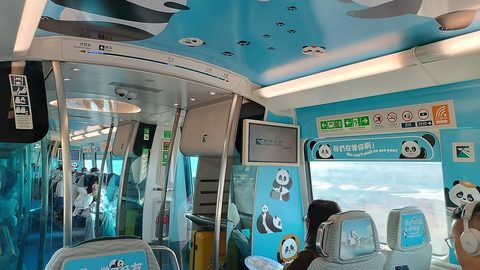 Hong Kong Flights, HKG Airport and the Airport Express
HKG to Central or Kowloon by Airport Express, taxi, or A-bus, plus how Hong Kong's in-town check-in makes it a strong flight hub.
-
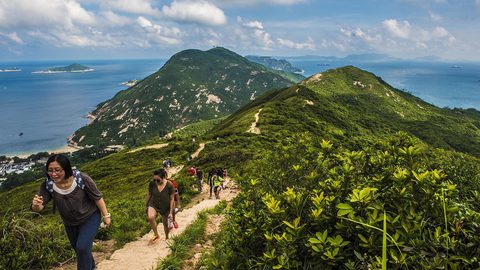 Hong Kong Weekends Hiking Trails Island Day Trips and Visitor Itineraries
Hong Kong's best escapes are minutes from the MTR: ridge hikes with harbour views, car-free islands with seafood, and fishing villages on stilts reachable in under an hour.
-
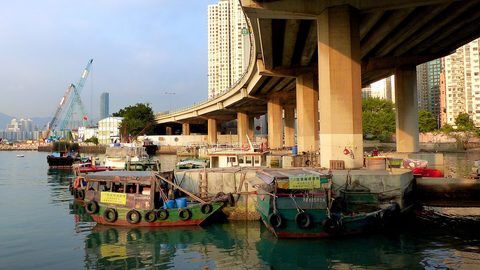 Best Time to Visit Hong Kong Weather Calendar and the Two Decisive Months
Hong Kong's best weather arrives from October to early December, with a secondary window in late March. Avoid Chinese New Year closures and the typhoon-prone summer.
-
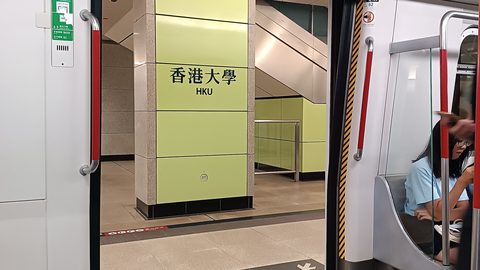 Getting Around Hong Kong MTR Octopus Minibuses and the Star Ferry
The MTR is the backbone of Hong Kong, but the Octopus card, minibuses, and exact-change rules on buses catch visitors out. Here is how to move without friction.
-
 Reading Hong Kong Hiking Trail Grades and Matching Them to Summer Heat
A practical guide to Reading Hong Kong Hiking Trail Grades and Matching Them to Summer Heat.
-
 What to Bring to a Hong Kong Junk Boat as a First Time Guest
A practical guide to What to Bring to a Hong Kong Junk Boat as a First Time Guest.
-
 A Beginner's Walk Through a Hong Kong Wet Market Without the Intimidation
A practical guide to A Beginner's Walk Through a Hong Kong Wet Market Without the Intimidation.