What Living in Hong Kong Actually Costs Per Month for Different Households
Hong Kong monthly costs vary dramatically by district, household size, and lifestyle. Here is the real budget breakdown for singles, couples, and families.
What Living in Hong Kong Actually Costs Per Month for Different Households
Most cost breakdowns tell you about percentages. Percentages hide what you actually pay. The real question is what leaves your bank account each month. A single person on the city fringe spends 22,000 to 35,000 HKD total. A couple sharing a flat needs 30,000 to 50,000 HKD. A family of four with a mid tier flat and no school fees runs 50,000 to 80,000 HKD. Add one child in an international school and that jumps to 70,000 to 110,000 HKD. Every number here comes from actual line items, not averages.
Rent is the biggest variable. A single person in a one bedroom on Hong Kong Island central pays 18,000 to 28,000 HKD. Move to the city fringe and the same apartment costs 14,000 to 20,000 HKD. Families renting a three bedroom in a mid tier district pay 28,000 to 45,000 HKD. New Territories two bedrooms run 16,000 to 24,000 HKD. Rent consumes 40 to 55 percent of a single person's budget, 35 to 50 percent for a couple, and 30 to 45 percent for a family. That share falls as household size rises because food and transport do not scale linearly.

Groceries: Wet Market Versus Imported Supermarket
Where you shop changes your food bill by 30 to 60 percent. A single person buying mostly at the wet market spends 2,500 to 4,000 HKD per month. The same person buying at an imported supermarket pays 4,500 to 7,000 HKD. Couples land at 5,000 to 9,000 HKD. Families of four spend 8,000 to 14,000 HKD. The difference is per kilo.
Price Per Kilo: Wet Market Vs Supermarket
Wet market vegetables run 10 to 30 HKD per kilo. The imported supermarket charges 30 to 70 HKD. Pork is 60 to 90 HKD per kilo at the wet market. Beef at the supermarket is 150 to 300 HKD per kilo. Live fish at the wet market costs 50 to 120 HKD per kilo. Cheese at the supermarket, 200 grams, is 40 to 90 HKD. If you cook and shop local, your grocery bill drops by a third or more. The trade off is time. Wet markets are open roughly 07:00 to 19:00 and require cash. Supermarkets stay open later and take credit cards. Split your shopping: buy produce at the wet market and packaged goods at the supermarket.
Eating Out: Cha Chaan Teng Versus Mid Range Dining
Eating out is cheap if you stay local. It gets expensive fast when you sit down at a mid range restaurant. A cha chaan teng breakfast set costs 35 to 55 HKD. Lunch set runs 50 to 80 HKD. Dinner set is 60 to 100 HKD. A dai pai dong meal per person is 50 to 90 HKD. A flat white at a specialty cafe is 40 to 55 HKD. Cha chaan teng milk tea is 18 to 25 HKD.
A mid range restaurant dinner per person with no alcohol costs 250 to 500 HKD. A three course dinner for two runs 600 to 1,200 HKD. Eat every meal at cha chaan teng and dai pai dong and your monthly food bill stays under 6,000 HKD for a single person. Do one mid range dinner a week and eat local the rest of the time, and you add 1,000 to 2,000 HKD.
The Trap To Avoid
Sit down in a Central or Tsim Sha Tsui restaurant without checking the menu and a dinner for two hits 1,200 HKD before drinks. Do not assume you can eat cheaply everywhere.
Transport and Utilities: the Surprises
Monthly transport for a single person using only public transport runs 500 to 1,000 HKD. An MTR adult fare within one zone costs 4.8 to 14.5 HKD. Cross harbour fares are 10.3 to 15.3 HKD. Urban bus fares are 4.5 to 12.1 HKD. Minibus fares are 3.0 to 10.0 HKD. The tram is a flat 3.0 HKD. The Star Ferry upper deck weekday fare is 5.0 HKD. Taxi flagfall for an urban red taxi is 27 HKD and 1.9 HKD per 200 metres after that. Budget 500 HKD on your Octopus if you commute by MTR and walk or take the tram. Cross harbour commuters hit 1,000 HKD.
Electricity: The Bill That Shocks Newcomers
In a month without heavy air conditioning, a one bedroom apartment uses 400 to 700 HKD. In August, with air conditioning running, that jumps to 900 to 1,600 HKD. A family flat in August uses 1,800 to 3,200 HKD. Water and gas for a single person costs 150 to 300 HKD per month. For a family, it is 400 to 800 HKD. Broadband home internet is 150 to 250 HKD per month. A mobile plan with 20 to 50 GB of data costs 100 to 200 HKD.
Add it up. A single person not using air conditioning heavily pays 650 to 1,150 HKD for utilities. In summer, that becomes 1,150 to 2,100 HKD. Families must budget more for utilities in hot months. Plan for the August spike.

Family Specific Costs That Change the Numbers
A family of four excluding rent and school fees needs 25,000 to 40,000 HKD per month. Add rent for a three bedroom mid tier district flat and the total is 50,000 to 80,000 HKD. Add one child in an international school and the total becomes 70,000 to 110,000 HKD.
School Fees By Tier
International kindergarten tuition is 60,000 to 120,000 HKD per year, or roughly 5,000 to 10,000 HKD per month. International primary school is 120,000 to 200,000 HKD per year. International secondary school is 150,000 to 250,000 HKD per year. Private local school tuition is 30,000 to 80,000 HKD per year. The monthly equivalent for a child in international school is 10,000 to 20,000 HKD.
The Domestic Helper Line Item
The legal minimum monthly salary is 4,870 HKD. The food allowance if you do not provide meals is 1,236 HKD. The employer levy is 400 HKD. Total employer cost including insurance is 6,000 to 7,500 HKD per month. The one time agency placement fee is 8,000 to 15,000 HKD. If both parents work and you need a helper, add 6,000 HKD to the monthly budget before school fees.
What to Do Next with These Numbers
Pick your household shape. Add up the categories that apply to you. Start with rent from the district tier you want. Add utilities based on season. Add transport based on commute type. Add groceries based on shopping habits. Add eating out based on how often you sit down at a mid range restaurant. If you have children, add school fees. If you have a domestic helper, add 6,000 HKD per month.
Most newcomers treat housing as the only big cost. That is the failure case. School fees, summer electricity, and mid range dining all add up fast. Budget for the worst month. August, with full air conditioning. Get that right and you will be fine the rest of the year.
Common Questions
What is the cheapest district for a single person to live in Hong Kong?
Sham Shui Po and Yau Ma Tei offer the lowest rents among connected districts. A one bedroom in Sham Shui Po costs well under the 14,000 to 20,000 HKD city fringe range. The trade off is older buildings, smaller space, and more street noise. New Territories flats in places like Tsuen Wan or Shatin also fall below the city fringe average, but your commute to Central or Kowloon will be 40 to 60 minutes.
How much should I budget for air conditioning in summer?
For a one bedroom apartment, budget 900 to 1,600 HKD per month in August. For a family flat, budget 1,800 to 3,200 HKD. In cooler months, electricity drops to 400 to 700 HKD for a one bedroom. Many newcomers underestimate the summer bill by half or more because they run air conditioning all night and during the day.
Is it cheaper to eat every meal at cha chaan teng than to cook at home?
For a single person, eating all meals at cha chaan teng costs roughly 4,200 to 6,000 HKD per month. Cooking with wet market groceries costs 2,500 to 4,000 HKD. Cooking is cheaper, but only if you buy local. Imported supermarket groceries are more expensive than eating out at cha chaan teng for many items.
What is the biggest hidden cost for a family moving to Hong Kong?
School fees. International primary school tuition is 120,000 to 200,000 HKD per year, or 10,000 to 17,000 HKD per month. That single line item can double the family budget. Even private local schools cost 30,000 to 80,000 HKD per year. School fees are the reason many families with children need 70,000 HKD or more per month.
Can a single person live in Hong Kong on 20,000 HKD per month?
Not if you want a private apartment. A one bedroom on the city fringe costs 14,000 to 20,000 HKD for rent alone. That leaves 0 to 6,000 HKD for everything else. A single person excluding rent needs 8,000 to 12,000 HKD. You would need to share a flat, live in a subdivided unit, or accept a New Territories location with a long commute to stay at 20,000 HKD total.
Read next
-
 Hong Kong Hotels and Serviced Apartments Before a Lease
Serviced apartments in Wan Chai, Kennedy Town, and Sai Ying Pun compared for the six weeks before you sign a Hong Kong lease.
Hong Kong Hotels and Serviced Apartments Before a Lease
Serviced apartments in Wan Chai, Kennedy Town, and Sai Ying Pun compared for the six weeks before you sign a Hong Kong lease.
-
 Where to Stay in Hong Kong a Shortlist of Districts Compared Honestly
Hong Kong districts vary wildly in rent, space, and commute reality. This shortlist compares where to stay based on what you actually get for your money.
Where to Stay in Hong Kong a Shortlist of Districts Compared Honestly
Hong Kong districts vary wildly in rent, space, and commute reality. This shortlist compares where to stay based on what you actually get for your money.
-
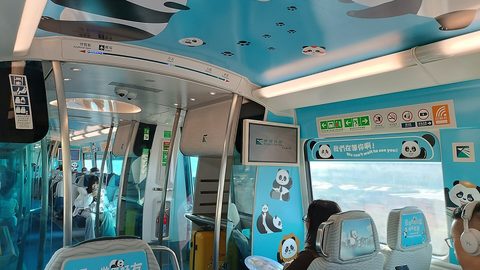 Hong Kong Flights, HKG Airport and the Airport Express
HKG to Central or Kowloon by Airport Express, taxi, or A-bus, plus how Hong Kong's in-town check-in makes it a strong flight hub.
Hong Kong Flights, HKG Airport and the Airport Express
HKG to Central or Kowloon by Airport Express, taxi, or A-bus, plus how Hong Kong's in-town check-in makes it a strong flight hub.
-
 Hong Kong Weekends Hiking Trails Island Day Trips and Visitor Itineraries
Hong Kong's best escapes are minutes from the MTR: ridge hikes with harbour views, car-free islands with seafood, and fishing villages on stilts reachable in under an hour.
Hong Kong Weekends Hiking Trails Island Day Trips and Visitor Itineraries
Hong Kong's best escapes are minutes from the MTR: ridge hikes with harbour views, car-free islands with seafood, and fishing villages on stilts reachable in under an hour.
-
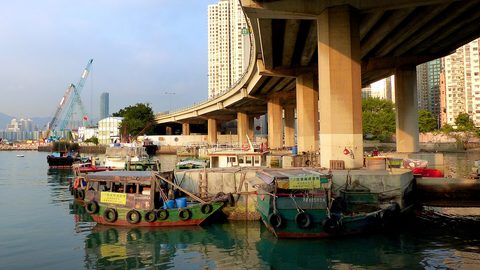 Best Time to Visit Hong Kong Weather Calendar and the Two Decisive Months
Hong Kong's best weather arrives from October to early December, with a secondary window in late March. Avoid Chinese New Year closures and the typhoon-prone summer.
Best Time to Visit Hong Kong Weather Calendar and the Two Decisive Months
Hong Kong's best weather arrives from October to early December, with a secondary window in late March. Avoid Chinese New Year closures and the typhoon-prone summer.
-
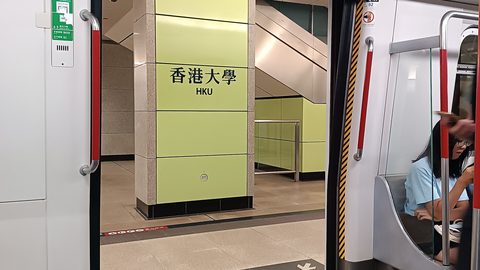 Getting Around Hong Kong MTR Octopus Minibuses and the Star Ferry
The MTR is the backbone of Hong Kong, but the Octopus card, minibuses, and exact-change rules on buses catch visitors out. Here is how to move without friction.
Getting Around Hong Kong MTR Octopus Minibuses and the Star Ferry
The MTR is the backbone of Hong Kong, but the Octopus card, minibuses, and exact-change rules on buses catch visitors out. Here is how to move without friction.
-
 Hong Kong Expat Cost of Living Broken Down by Lifestyle Tier
Real annual costs for expats in Hong Kong: budget, comfortable, and premium tiers covering rent by district, school fees, domestic helpers, and flights home.
Hong Kong Expat Cost of Living Broken Down by Lifestyle Tier
Real annual costs for expats in Hong Kong: budget, comfortable, and premium tiers covering rent by district, school fees, domestic helpers, and flights home.
-
 How to Set Up Your Finances When You First Arrive in Hong Kong
Open the right bank account, set up Octopus and FPS, and avoid costly transfer fees. A practical money setup guide for new arrivals in Hong Kong.
How to Set Up Your Finances When You First Arrive in Hong Kong
Open the right bank account, set up Octopus and FPS, and avoid costly transfer fees. A practical money setup guide for new arrivals in Hong Kong.
-
 Mobile Plans, SIM Cards and Connectivity Costs for Expats in Hong Kong
Compare 3HK, SmarTone, and CMHK mobile plans for Hong Kong expats. Monthly costs, data tiers, prepaid vs contract, and tips on staying connected abroad.
Mobile Plans, SIM Cards and Connectivity Costs for Expats in Hong Kong
Compare 3HK, SmarTone, and CMHK mobile plans for Hong Kong expats. Monthly costs, data tiers, prepaid vs contract, and tips on staying connected abroad.