Banking, the Currency Peg, and Daily Payment Reality
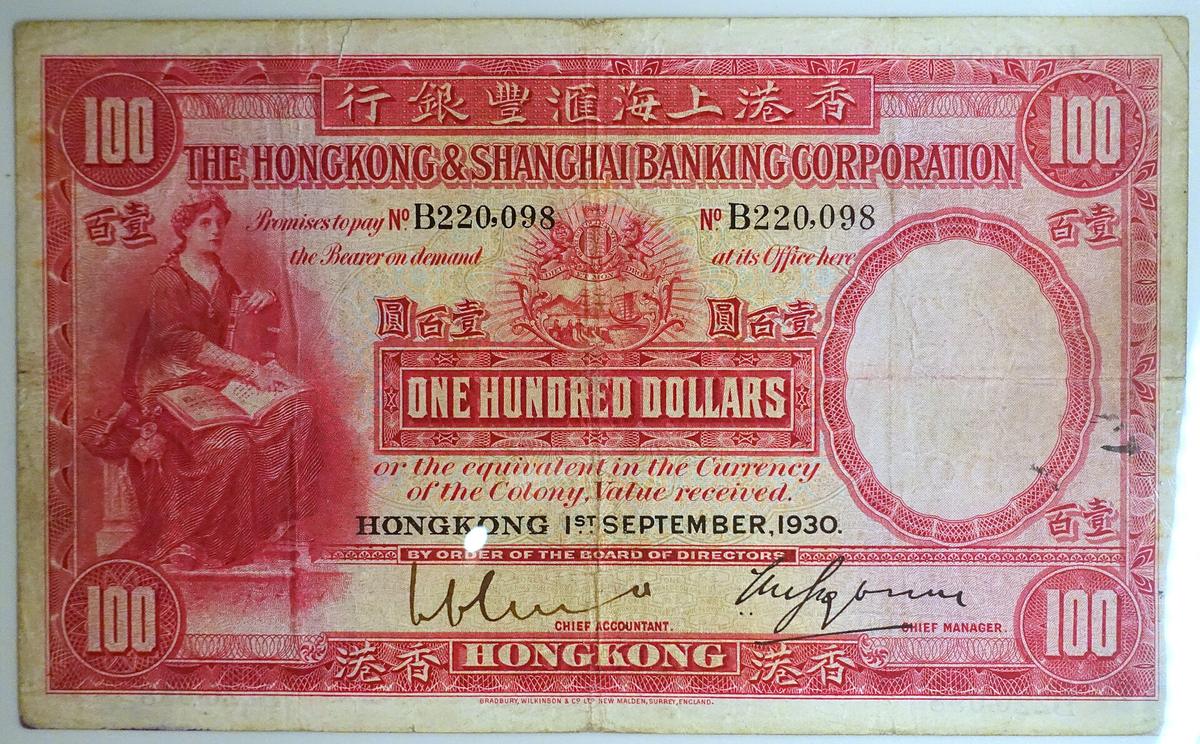
The Hong Kong dollar is pegged, but daily spending runs on Octopus, cash, and contactless. Here is how payments actually work.
The Peg is Not Your Problem. Cash Is.
A lot of visitors arrive assuming Hong Kong is a cashless city like Singapore or Seoul. It is not. The ground truth is split: you need an Octopus card for transport and convenience stores, you need cash for half the food you will eat, and your credit card will work in malls but might quietly charge you extra. The Hong Kong dollar peg to the US dollar makes currency maths simple, but the everyday payment system is still a negotiation between plastic, stored value, and notes.
How the Peg Works and What it Means for Your Wallet
The Peg Mechanics
The Hong Kong Monetary Authority (HKMA) keeps the Hong Kong dollar between HK$7.75 and HK$7.85 per 1 US dollar. It does this by buying or selling HKD in the open market. For you, that means no currency risk if you earn or hold USD. For non USD earners, your exchange rate follows the USD cross rate: if the yen weakens against the dollar, it also weakens against the HKD by the same amount.
Opening A Local Account
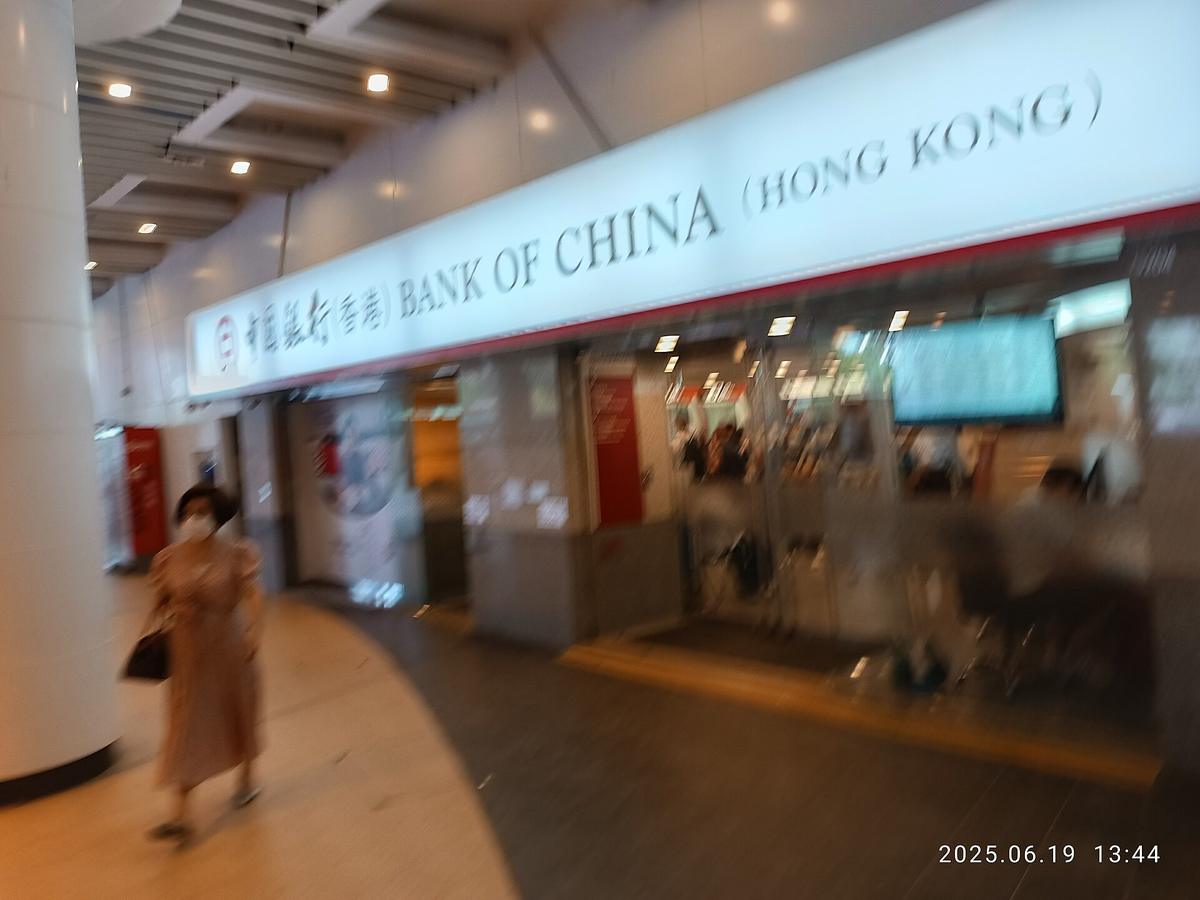
Open a local bank account in person and you need your passport, a proof of residential address dated within 3 months, a visa with at least 6 months validity, and an employment contract or proof of income. The appointment takes 1 to 2 hours at the branch. Activation runs from instant to 5 business days. Major retail banks for new arrivals are HSBC, Bank of China Hong Kong, Standard Chartered, Hang Seng Bank, and Citibank.
If you do not want to visit a branch, virtual banks with remote opening include ZA Bank, WeLab Bank, Mox Bank, Livi Bank, Fusion Bank, Ant Bank, PAObank, and Airstar Bank. You need a Hong Kong ID card and a local residential address. Approval comes within 1 business day.

Octopus is the Default, but Not the Only Option
How Octopus Works
The Octopus card launched in 1997. It holds up to HK$3,000 in stored value. Tap it on MTR turnstiles, buses, minibuses, ferries, trams, convenience stores like 7 Eleven and Circle K, supermarkets, fast food chains, parking meters, vending machines, and some taxis. Load it onto an iPhone or Apple Watch, or onto Android via the Octopus App for Android with a compatible SIM or device.
Top ups at convenience stores are cash only. If you run out of value at 1am and have no cash, you are stuck. Keep a backup HK$200 note in your phone case or wallet.
The Bus Problem
Failure case: you tap onto a bus without an Octopus card and without exact change. Buses and trams require exact fare if paying cash. Many routes do not give change. Stop at a convenience store before boarding. Buy a drink to get coins and a top up.
Where Octopus Fails
Where Octopus does not work: individual taxi drivers (many accept only cash), some market stalls in wet markets, and older cha chaan tengs or dai pai dongs that have never taken card payments. Also the HK$1,000 note: supermarkets and large chains accept it, but taxi drivers and small shop owners refuse it, especially at night. Break large notes early in the day at a 7 Eleven or a supermarket.
Cash is King in Wet Markets and Old Tea Houses
Wet markets, the Temple Street Night Market, dai pai dongs, and push cart dim sum spots are cash only. If you plan to eat at a place with a handwritten menu taped to the wall, budget for small notes. HK$10, HK$20, HK$50, HK$100, and HK$500 notes are the common denominations. HK$1,000 notes will be refused by most of these places.
The Faster Payment System (FPS) launched in 2018 and connects every retail bank and stored value operator in Hong Kong. You can send money to anyone with just a mobile number, email, or FPS ID. It works 24/7 with no transaction fees at most banks. Daily transfer limits range from HK$10,000 to HK$1,000,000 depending on your bank. But FPS is for transfers between people, not for paying a noodle stall that has no QR code on the counter. For that, you need cash.
The Credit Card Trap: Dynamic Currency Conversion in Malls
Always Pay in HKD
Credit cards are accepted at luxury malls like Harbour City, Landmark, elements, and at hotel restaurants, chain stores, and department stores. But when you hand over your overseas card at a high end boutique or a hotel, the terminal may ask if you want to pay in your home currency instead of Hong Kong dollars. This is Dynamic Currency Conversion (DCC). It uses a terrible exchange rate set by the terminal operator, 3 to 5 percent worse than the market rate. Always choose to pay in HKD. If the terminal does not ask, check the receipt. A line that says 'Your card will be charged in X currency' means DCC was applied. Ask them to void and rerun in HKD.
ATM Strategy
ATMs in Hong Kong charge fees that vary by bank and by your home card. Standard Chartered, HSBC, and Citibank ATMs are the most common. Many local ATMs add a HK$20 to HK$30 fee per withdrawal for cards from foreign banks. Your home bank may add its own fee on top. Withdraw larger amounts less often. A typical ATM max is HK$10,000 per transaction, but your daily card limit is the real ceiling.
_June_2025_R12S.jpg)
One Honest Caveat About the HK$1,000 Note
The single thing that most often goes wrong with money in Hong Kong is the HK$1,000 note. Visitors arrive, change a large amount at the airport, and get a stack of purple HK$1,000 bills. Then they try to pay for a HK$38 bowl of wonton noodles and the shopkeeper waves it away. The HK$1,000 note is legal tender, but small businesses treat it as a risk. They cannot easily verify it, and they do not want to break it. Break large notes at a supermarket, a 7 Eleven, or an MTR customer service counter as soon as you get them. If you carry one and need to pay a taxi driver at 1am, you will be refused, and you will be stuck.
Common Questions
Do I need to open a Hong Kong bank account as a short term visitor?
No, not for a trip under 90 days. Carry a mix of Octopus card, a credit card with no foreign transaction fee, and cash. Open a bank account only if you are moving for work or study and need to receive salary, pay rent by autopay, or use FPS for shared meals and bill splitting.
Can I use my contactless Visa or Mastercard on the MTR?
Yes, the MTR accepts contactless Visa, Mastercard, and UnionPay at all gates. But buses, minibuses, trams, and ferries do not. You still need an Octopus card or cash for those. If you ride only the MTR, contactless card works. If you take one bus, you need Octopus.
What is the easiest way to get cash in Hong Kong?
Use a global ATM at the airport after arrival. The HSBC and Standard Chartered machines at the arrivals hall dispense HKD. Withdraw enough for 3 days of markets, small meals, and taxi rides. Top up Octopus at the same time from the ATMs that offer stored value reload (marked with Octopus logo).
How do I pay a taxi if I have no cash at 2am?
Some taxis accept Octopus, but not all. A growing number accept AlipayHK or WeChat Pay, but only if the driver has the merchant QR code displayed. Cash is the only reliable method. If you try to pay with card and the driver refuses, walk to a 24 hour 7 Eleven, buy something small to get change, and pay the driver in cash. Avoid this by keeping a HK$100 note in a separate pocket of your jacket.
Why does my first tax bill in Hong Kong feel like two years of tax?
Hong Kong does not deduct tax from salary at source in your first year. The Inland Revenue Department assesses your income after the tax year ends (31 March). When the bill arrives, it includes the tax for the past year plus provisional tax for the current year. The combined amount can be 1.5 to 2 times a single year's liability. Expect this and set money aside monthly from month one. MPF contributions, at 5% each from you and your employer, are deducted monthly and do not appear on that tax bill.
Read next
-
 Hong Kong Hotels and Serviced Apartments Before a Lease
Serviced apartments in Wan Chai, Kennedy Town, and Sai Ying Pun compared for the six weeks before you sign a Hong Kong lease.
Hong Kong Hotels and Serviced Apartments Before a Lease
Serviced apartments in Wan Chai, Kennedy Town, and Sai Ying Pun compared for the six weeks before you sign a Hong Kong lease.
-
 Where to Stay in Hong Kong a Shortlist of Districts Compared Honestly
Hong Kong districts vary wildly in rent, space, and commute reality. This shortlist compares where to stay based on what you actually get for your money.
Where to Stay in Hong Kong a Shortlist of Districts Compared Honestly
Hong Kong districts vary wildly in rent, space, and commute reality. This shortlist compares where to stay based on what you actually get for your money.
-
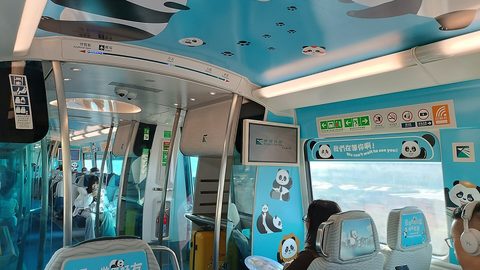 Hong Kong Flights, HKG Airport and the Airport Express
HKG to Central or Kowloon by Airport Express, taxi, or A-bus, plus how Hong Kong's in-town check-in makes it a strong flight hub.
Hong Kong Flights, HKG Airport and the Airport Express
HKG to Central or Kowloon by Airport Express, taxi, or A-bus, plus how Hong Kong's in-town check-in makes it a strong flight hub.
-
 Hong Kong Weekends Hiking Trails Island Day Trips and Visitor Itineraries
Hong Kong's best escapes are minutes from the MTR: ridge hikes with harbour views, car-free islands with seafood, and fishing villages on stilts reachable in under an hour.
Hong Kong Weekends Hiking Trails Island Day Trips and Visitor Itineraries
Hong Kong's best escapes are minutes from the MTR: ridge hikes with harbour views, car-free islands with seafood, and fishing villages on stilts reachable in under an hour.
-
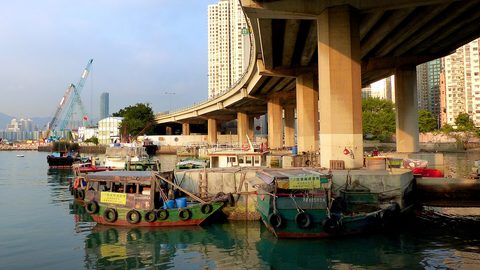 Best Time to Visit Hong Kong Weather Calendar and the Two Decisive Months
Hong Kong's best weather arrives from October to early December, with a secondary window in late March. Avoid Chinese New Year closures and the typhoon-prone summer.
Best Time to Visit Hong Kong Weather Calendar and the Two Decisive Months
Hong Kong's best weather arrives from October to early December, with a secondary window in late March. Avoid Chinese New Year closures and the typhoon-prone summer.
-
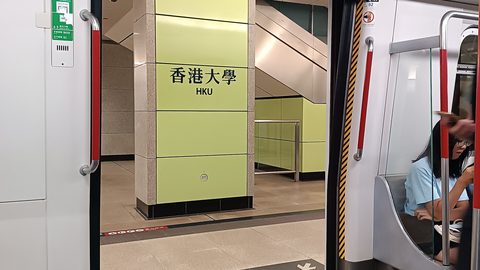 Getting Around Hong Kong MTR Octopus Minibuses and the Star Ferry
The MTR is the backbone of Hong Kong, but the Octopus card, minibuses, and exact-change rules on buses catch visitors out. Here is how to move without friction.
Getting Around Hong Kong MTR Octopus Minibuses and the Star Ferry
The MTR is the backbone of Hong Kong, but the Octopus card, minibuses, and exact-change rules on buses catch visitors out. Here is how to move without friction.
-
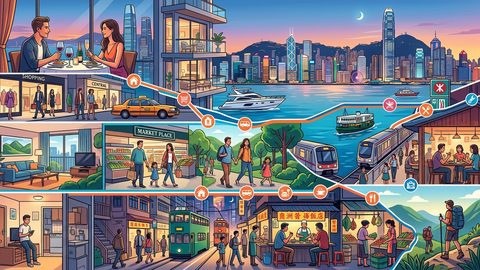 Hong Kong Expat Cost of Living Broken Down by Lifestyle Tier
Real annual costs for expats in Hong Kong: budget, comfortable, and premium tiers covering rent by district, school fees, domestic helpers, and flights home.
Hong Kong Expat Cost of Living Broken Down by Lifestyle Tier
Real annual costs for expats in Hong Kong: budget, comfortable, and premium tiers covering rent by district, school fees, domestic helpers, and flights home.
-
 How to Set Up Your Finances When You First Arrive in Hong Kong
Open the right bank account, set up Octopus and FPS, and avoid costly transfer fees. A practical money setup guide for new arrivals in Hong Kong.
How to Set Up Your Finances When You First Arrive in Hong Kong
Open the right bank account, set up Octopus and FPS, and avoid costly transfer fees. A practical money setup guide for new arrivals in Hong Kong.
-
 Mobile Plans, SIM Cards and Connectivity Costs for Expats in Hong Kong
Compare 3HK, SmarTone, and CMHK mobile plans for Hong Kong expats. Monthly costs, data tiers, prepaid vs contract, and tips on staying connected abroad.
Mobile Plans, SIM Cards and Connectivity Costs for Expats in Hong Kong
Compare 3HK, SmarTone, and CMHK mobile plans for Hong Kong expats. Monthly costs, data tiers, prepaid vs contract, and tips on staying connected abroad.