Hong Kong Visa Paths From Employment Sponsorship to the Quality Migrant Scheme
Hong Kong offers several visa routes beyond standard employment sponsorship, including points-tested schemes and dependant visas that permit work without a separate application.
Hong Kong Visa Paths: Which Routes Require a Job Offer and Which Do Not
Four main visa routes let you live in Hong Kong. Two require a job offer; two do not.
The General Employment Policy (GEP) visa demands a confirmed job offer from a local employer. That employer must prove no suitable local candidate is available, the salary matches market rate, the vacancy is genuine, and they can afford to pay you. Processing takes 4 to 6 weeks. The initial visa runs 12 months and is renewable.
The Quality Migrant Admission Scheme (QMAS) and the Top Talent Pass Scheme (TTPS) do not require a job offer. A dependant visa also skips the job-offer requirement and, critically, lets you work without any additional permit. If you want to move to Hong Kong without lining up a job first, QMAS or TTPS are your only routes.
The working holiday scheme covers 14 partner economies for temporary stays of up to 12 months. Age caps apply: 18 to 30 for most countries, 18 to 35 for Canada, Australia, New Zealand, Ireland, Austria, Hungary, Germany, Japan, and Korea.

General Employment Policy: the Standard Job Offer Route
How Employer Sponsorship Works
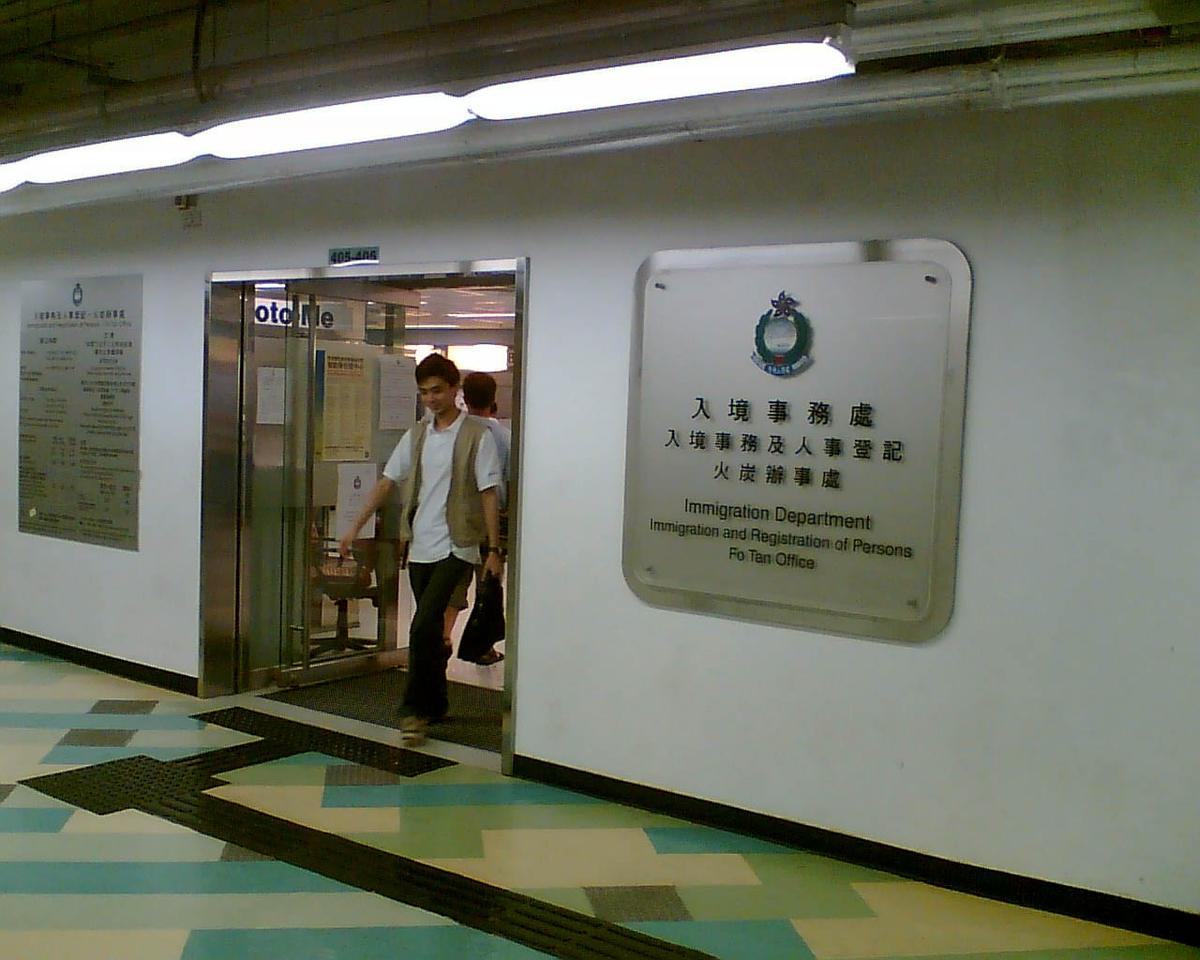
The GEP is the most common visa for skilled workers. Your employer sponsors you. They must demonstrate four things to the Immigration Department: no suitable local candidate exists, the salary is at market rate, the vacancy is genuine, and they have the financial ability to pay you.
The visa is granted for 12 months initially, then renewed. Processing takes 4 to 6 weeks. It stretches longer if the employer's documentation is incomplete.
The Rejection Risk
If the employer cannot satisfy the local labour market test, the application fails. Roles in highly specialised fields and senior management positions pass more easily. Expect extra scrutiny if you work in a common profession.
Quality Migrant Admission Scheme: Points Tested, No Job Required
The Two Application Tracks
The QMAS does not require a job offer. It is a points-based immigration system with an annual quota of 4,000. You apply under one of two tests.
The General Points Test requires a minimum of 80 points out of 245. Points are awarded for age, education, work experience, and language ability. Age: 18 to 39 gets 30 points, 40 to 44 gets 20, 45 to 50 gets 15, and 51 and older gets 0. Education: a doctorate gives 40 points, a master's degree gives 20, a bachelor's gives 10. Work experience: 10 or more years with at least 5 in a senior role gives 40 points. Language: fluent Chinese plus fluent English gives 20 points.
The Achievement-based Points Test requires a single outstanding achievement, an Olympic medal or a Nobel prize, for example, and does not use a points threshold. The director of immigration must approve it.
Selection And The Failure Case
Selection exercises happen quarterly. If you score 80 points but sit in a common occupational group, you may not be selected within the 4,000 annual quota. Apply for the TTPS instead if you meet its criteria.
| Route | Requires Job Offer | Key Criteria | Initial Validity |
|---|---|---|---|
| General Employment Policy (GEP) | Yes | Employer must prove no local candidate | 12 months |
| Quality Migrant Admission Scheme (QMAS) | No | Points test, minimum 80 of 245 | 12 months (typically) on approval |
| Top Talent Pass Scheme (TTPS) | No | High income or degree from eligible university | 24 months |
Top Talent Pass Scheme: Fast Track for High Earners and Graduates
The Three Categories
The TTPS has three categories, none requiring a job offer upfront. Category A: applicants with an annual income of HKD 2.5 million or more in the previous year. Category B: holders of a bachelor's degree from one of the 184 eligible universities plus at least 3 years of work experience in the past 5 years. Category C: the same degree but less than 3 years of work experience, with a quota of 10,000 per year.
Validity And The Renewal Catch
The initial visa runs 24 months, double the GEP's 12. The catch: at renewal, you must show you are employed or running a business in Hong Kong. Category C is the most competitive because of the quota. Apply early in the year.
The Failure Case
If you cannot prove income for Category A, or your degree is from a university not on the list of 184, you cannot use TTPS. Fall back on QMAS.

Dependant Visas: the Work Right That Most People Miss
Who Qualifies
A dependant visa covers the spouse and unmarried children under 18 of a GEP, QMAS, or TTPS visa holder. The same applies if your spouse is a Hong Kong permanent resident.
The Overlooked Work Right
Dependant visa holders may work in any job without applying for a separate work permit. They may also study without a separate student visa. This makes the dependant route the most flexible option for a non-working partner who wants to enter the workforce later.
The Failure Case
If the main visa holder loses their status or fails to renew, the dependant's visa lapses. Ensure the primary applicant renews on time.
Permanent Residency and Other Routes
The 7-Year Path To Permanent Residency
To become a Hong Kong permanent resident, you need 7 years of continuous ordinary residence. The clock breaks if you are absent for 12 or more months without a valid reason, if you are absent with intent not to return, or if you are imprisoned or deported. Living abroad on an employment contract outside Hong Kong also breaks the clock. Apply using form ROP145. Processing takes 6 to 8 weeks.
Working Holiday And Visitor Entry
The working holiday scheme covers 14 partner economies. Most countries allow 12 months of stay, with a work restriction of 3 to 6 months with the same employer. Age limits: 18 to 30 for most countries; 18 to 35 for Canada, Australia, New Zealand, Ireland, Austria, Hungary, Germany, Japan, and Korea. Annual quotas range from 100 to 5,000 per country. This is a temporary route. It is not a path to permanent residency.
Visitor entry is visa-free for over 170 countries and territories. The UK gets 180 days. The USA, EU, Australia, Canada, Japan, South Korea, Singapore, Malaysia, Brazil, and Turkey all get 90 days. India gets 14 days with pre-arrival registration. Taiwan gets 30 days with online pre-arrival registration. Russia gets 14 days. South Africa gets 30 days. Saudi Arabia and Thailand get 30 days. Vietnam and the Philippines get 14 days. Pakistan and Bangladesh are not visa-free. Nepal and Sri Lanka get visa on arrival for 30 days. Mainland China requires an endorsement; it is not visa-free.
The Identity Card Rule
Regardless of visa type, if you are aged 11 or over and staying more than 30 days, register for a Hong Kong Identity Card within 30 days of arrival. Failure is an offence. The fine reaches HKD 5,000. Replace the card at age 11 and 18.
Your Decision
If you have a job offer and your employer is willing to sponsor, the GEP route is straightforward. If you want to move without a job, QMAS for points scorers or TTPS for high earners and top university graduates are your options. Dependant visa holders get the best deal: full work rights without a separate application.
The single most common mistake is assuming a visitor visa can be converted into a work visa while in Hong Kong. It cannot. You must apply, leave, and re-enter.
Who the Hong Kong Employment Visa Suits and Who it Does Not
The Hong Kong employment visa suits skilled professionals with a job offer, high earners who can prove HKD 2.5 million annual income, graduates from one of the 184 eligible universities, and anyone with a spouse or parent already holding a Hong Kong work visa.
It does not suit low-skilled workers. No route exists for them. It does not suit retirees without substantial assets. It does not suit people who plan to arrive on a visitor visa and sort out paperwork later. That is the single thing that most often goes wrong: arriving on a 90-day visa-free entry, then discovering you cannot apply for a work visa from inside Hong Kong. Leave. Apply from your home country.
Common Questions
Can I apply for a Hong Kong employment visa without a job offer?
Yes, through the Quality Migrant Admission Scheme (QMAS) or the Top Talent Pass Scheme (TTPS). Both do not require a confirmed job offer at the time of application.
How long does it take to get a Hong Kong employment visa?
For the General Employment Policy, processing is 4 to 6 weeks. QMAS selection exercises are quarterly, so total time can be 3 to 6 months. TTPS is faster, around 2 to 4 weeks.
Can I work in Hong Kong on a dependant visa?
Yes. Dependant visa holders may work without a separate permit. This applies to spouses and unmarried children under 18 of GEP, QMAS, TTPS holders, and permanent residents.
What are the minimum points for QMAS?
80 points out of 245 on the General Points Test. Scoring 80 does not guarantee selection; the quarterly quota of 4,000 per year is competitive.
What is the Top Talent Pass Scheme income threshold?
Category A requires annual income of HKD 2.5 million or more in the previous year. You do not need a job offer, but you need proof of income.
How long is the initial TTPS visa valid?
24 months. At renewal, you must show you are employed or operating a business in Hong Kong.
Can I switch from a visitor visa to an employment visa in Hong Kong?
No. You must apply for an employment visa from outside Hong Kong. Over 170 countries have visa-free entry for stays of 14 to 180 days, but you cannot convert that into a work visa without leaving and applying.
Read next
-

 Hong Kong Hotels and Serviced Apartments Before a Lease
Serviced apartments in Wan Chai, Kennedy Town, and Sai Ying Pun compared for the six weeks before you sign a Hong Kong lease.
Hong Kong Hotels and Serviced Apartments Before a Lease
Serviced apartments in Wan Chai, Kennedy Town, and Sai Ying Pun compared for the six weeks before you sign a Hong Kong lease.
-
 Where to Stay in Hong Kong a Shortlist of Districts Compared Honestly
Hong Kong districts vary wildly in rent, space, and commute reality. This shortlist compares where to stay based on what you actually get for your money.
Where to Stay in Hong Kong a Shortlist of Districts Compared Honestly
Hong Kong districts vary wildly in rent, space, and commute reality. This shortlist compares where to stay based on what you actually get for your money.
-
 Hong Kong Flights, HKG Airport and the Airport Express
HKG to Central or Kowloon by Airport Express, taxi, or A-bus, plus how Hong Kong's in-town check-in makes it a strong flight hub.
Hong Kong Flights, HKG Airport and the Airport Express
HKG to Central or Kowloon by Airport Express, taxi, or A-bus, plus how Hong Kong's in-town check-in makes it a strong flight hub.
-
 Hong Kong Weekends Hiking Trails Island Day Trips and Visitor Itineraries
Hong Kong's best escapes are minutes from the MTR: ridge hikes with harbour views, car-free islands with seafood, and fishing villages on stilts reachable in under an hour.
Hong Kong Weekends Hiking Trails Island Day Trips and Visitor Itineraries
Hong Kong's best escapes are minutes from the MTR: ridge hikes with harbour views, car-free islands with seafood, and fishing villages on stilts reachable in under an hour.
-
 Best Time to Visit Hong Kong Weather Calendar and the Two Decisive Months
Hong Kong's best weather arrives from October to early December, with a secondary window in late March. Avoid Chinese New Year closures and the typhoon-prone summer.
Best Time to Visit Hong Kong Weather Calendar and the Two Decisive Months
Hong Kong's best weather arrives from October to early December, with a secondary window in late March. Avoid Chinese New Year closures and the typhoon-prone summer.
-
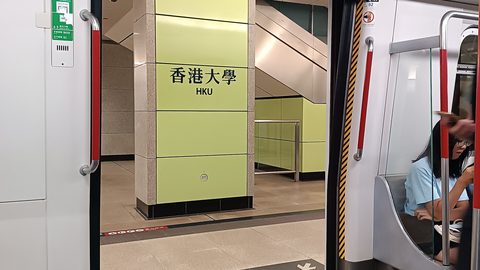 Getting Around Hong Kong MTR Octopus Minibuses and the Star Ferry
The MTR is the backbone of Hong Kong, but the Octopus card, minibuses, and exact-change rules on buses catch visitors out. Here is how to move without friction.
Getting Around Hong Kong MTR Octopus Minibuses and the Star Ferry
The MTR is the backbone of Hong Kong, but the Octopus card, minibuses, and exact-change rules on buses catch visitors out. Here is how to move without friction.
-
 Hong Kong Expat Cost of Living Broken Down by Lifestyle Tier
Real annual costs for expats in Hong Kong: budget, comfortable, and premium tiers covering rent by district, school fees, domestic helpers, and flights home.
Hong Kong Expat Cost of Living Broken Down by Lifestyle Tier
Real annual costs for expats in Hong Kong: budget, comfortable, and premium tiers covering rent by district, school fees, domestic helpers, and flights home.
-
 How to Set Up Your Finances When You First Arrive in Hong Kong
Open the right bank account, set up Octopus and FPS, and avoid costly transfer fees. A practical money setup guide for new arrivals in Hong Kong.
How to Set Up Your Finances When You First Arrive in Hong Kong
Open the right bank account, set up Octopus and FPS, and avoid costly transfer fees. A practical money setup guide for new arrivals in Hong Kong.
-
 Mobile Plans, SIM Cards and Connectivity Costs for Expats in Hong Kong
Compare 3HK, SmarTone, and CMHK mobile plans for Hong Kong expats. Monthly costs, data tiers, prepaid vs contract, and tips on staying connected abroad.
Mobile Plans, SIM Cards and Connectivity Costs for Expats in Hong Kong
Compare 3HK, SmarTone, and CMHK mobile plans for Hong Kong expats. Monthly costs, data tiers, prepaid vs contract, and tips on staying connected abroad.