Kowloon Tong Where to Stay Among the Schools and Low-Rise Residences
The real cost of renting a low-rise apartment in Kowloon Tong, where the school district and garden estates command a premium for families needing the East Rail commute.
Kowloon Tong Where to Stay Among the Schools and Low-Rise Residences
Walk To School, Not To The Car
The school run starts at 07:45 on Oxford Road, and it looks nothing like a drop-off lane. Parents walk their children out of three-storey walk-ups with private gardens, cross a tree-lined street, and hand them to teachers at Yew Chung International School moments later. No idling minibuses. No traffic jams. That is the tradeoff you are paying for. The question is not whether Kowloon Tong rents are high. They are. The question is what you get for the premium, and whether it still makes sense when the East Rail Line can put you in Central in 22 minutes.
Kowloon Tong is a zoning anomaly. It is zoned Residential Group C, which caps new buildings at 12 storeys and a plot ratio of 3.0. That means no towers. What you find instead are low-rise walk-ups from the 1950s to 1970s, townhouse complexes from the 1990s and 2000s, and a handful of newer luxury low-density blocks fought over by local resident groups. The housing stock is old and the supply is fixed. That is the fundamental reason rents here run higher than comparable flats 500 metres outside the school net.
The School Net Premium
The catchment effect is real. Rental premiums for flats inside the Kowloon Tong School net run 15 to 25 percent above equivalent flats just beyond it. The primary catchment school is Kowloon Tong School, a government-aided Chinese-medium school, and the secondary catchment school is Bishop Walsh Catholic School, English-medium. The overseas school cluster is denser than almost anywhere else in Hong Kong. Within one kilometre you have Yew Chung International School, Australian International School, and American International School. Within two kilometres, Kingston International School and Kowloon Junior School. The kindergarten cluster adds Anfield International and St. Catherine's. If you have school-age children and you want walking drop-off, Kowloon Tong is the only place that delivers it.


The Rental Premium for Low-Rise Space
What Low-Rise Buys You
The housing typology determines the price. Low-rise walk-up buildings on Oxford Road, Durham Road, Kent Road, and Hereford Road are three to five storeys, mostly without lifts. They date from 1955 to 1975. What they offer that high-rise flats cannot is private gardens, direct street access, and large balconies. The flats on Durham Road have balconies big enough for a table and chairs. The townhouse-style duplexes on Kent Road come with rooftop terraces. The garden flats on Cornwall Street sit in 1950s and 1960s blocks with setback gardens. These are not features available elsewhere at any price. They are specific to the low-rise zoning.
A 2-bedroom low-rise flat in the 500 to 700 square foot range rents for HKD 35,000 to 55,000 per month in 2026. A 3-bedroom flat, 800 to 1,200 square feet, runs HKD 55,000 to 90,000. Condition and proximity to the MTR station drive the spread. Townhouses, which are rare even by Kowloon Tong standards, cost HKD 100,000 to 180,000 per month. Purchase prices for low-rise flats run HKD 18,000 to 25,000 per square foot saleable in 2026, and townhouses run HKD 25,000 to 35,000 per square foot. These are annual figures from the Rating and Valuation Department, which revalues every April. The next revaluation takes effect 1 April 2027.
Structural Downsides
Downsides are structural, not negotiable. The majority of 3 to 4 storey walk-ups have no lift. If you live on the top floor, you carry groceries and children up the stairs every day. Car parking is not included. Low-rise flats have no dedicated space; street parking permits cost HKD 2,000 to 3,000 per month. Townhouses get one space each. Noise is low on Oxford Road, Durham Road, Kent Road, and Hereford Road, but Cornwall Street and Waterloo Road frontages are audible. Air quality is moderated by tree cover on the side streets, but worsens on the main roads. There is no nightlife. Zero bars or late-night venues exist within the residential area. Over 80 percent of residential leases are signed by households with school-age children. Fewer than 5 percent of leases are signed by single occupants. This is a family enclave, not a singles neighbourhood.
The East Rail Line Trade
Kowloon Tong MTR is the interchange between the Kwun Tong Line and the East Rail Line. The trip to Tsim Sha Tsui takes 10 to 12 minutes on the Kwun Tong Line. The trip to Central takes 18 to 22 minutes on the East Rail Line to Admiralty, then one stop on the Tsuen Wan Line. The Shenzhen border at Lo Wu is 32 to 35 minutes on the East Rail Line. Hong Kong International Airport is 35 to 45 minutes via the East Rail Line to Tai Wai, then the Tuen Ma Line to Tung Chung, then the Airport Express. That airport transfer is a two-change journey. It is workable but not convenient.
The East Rail Line is the reason Kowloon Tong works for families where one parent travels to Central. The train is fast, frequent, and runs directly to Admiralty without swapping lines. But the journey is a straight trade. You get low-rise space and walking school drop-off in exchange for 40 minutes at each end of the day. If your office is in Tsim Sha Tsui or Mong Kok, the Kwun Tong Line shortens it. If you head to Hong Kong Island daily, budget for the time and accept it.
What the Rental Covers Beyond the Flat
Daily Life On Foot
The rent covers proximity, not amenities. Walk to Kowloon Tsai Park in 5 to 10 minutes from most residential streets. Festival Walk, the shopping centre directly above the MTR, has 220 shops, a cinema, an ice rink, and a Taste supermarket. It opened in 1998 and functions as the neighbourhood living room. The Kowloon City wet market and restaurant district are a 10 to 15 minute walk south. For groceries or dinner, you do not need a car. For a hospital visit, Baptist Hospital is a 5 minute walk from the MTR. Queen Elizabeth Hospital is 10 minutes by taxi.
School Buses And Connections
The school bus hub operates from Festival Walk and the Kowloon Tong MTR bus terminus, serving ESF and other overseas schools across Hong Kong Island and the New Territories. Bus routes serving the area include KMB 2B, 2D, 7, 7B, 10, 72X, 81C, 87D, 270A, 271, and 281A. Green minibuses 25M, 29A, and 29B run to Kowloon City and Mong Kok. Cross-harbour bus routes 170 and 182 run from the MTR bus terminus to Hong Kong Island. For the Kowloon Public Library, walk 15 minutes or take one MTR stop to Mong Kok East.
The Lease You Will Sign
The lease structure is standard for Hong Kong. Typical lease terms run two years, with a one year break clause. The security deposit is two months rent. Government rent and rates for 2026 to 2027 are each calculated at 5 percent of the rateable value, billed quarterly. Rateable values are reassessed annually by the Rating and Valuation Department. Budget for those costs separately from the rent. They add up.
| Typology | Size Range (sq ft saleable) | Monthly Rent (HKD) | Key Features |
|---|---|---|---|
| 2-bedroom low-rise flat | 500 - 700 | 35,000 - 55,000 | Walk-up, no lift, street access |
| 3-bedroom low-rise flat | 800 - 1,200 | 55,000 - 90,000 | Garden or balcony access, near MTR |
| Townhouse | Varies | 100,000 - 180,000 | Private lift, rooftop terrace, parking |


Is the Premium Worth the East Rail Commute
Do The Maths On Your Mornings
There is no universal answer. It depends on whether walking school drop-off is worth a 20 to 25 percent premium over a comparable flat 500 metres outside the catchment area. If both parents travel to Central, the additional 22 minutes each way may cancel the time saved on the school run. If one parent works from home or works in Tsim Sha Tsui, the balance shifts decisively in favour of Kowloon Tong.
The ridge west of the district is not in play for this decision. The rental data and housing stock covered here stop at the Kowloon Tong boundary. Ho Man Tin and Sha Tin are separate pages entirely. Single adults should skip Kowloon Tong. The demographic ratio alone argues against it: under 5 percent of leases go to single occupants, and the neighbourhood has no social infrastructure for them. Families with children in the overseas or government-aided schools listed here should consider it seriously, then decide on the stairs.
Pay For The Floor, Not The View
The lifts are the hidden cost. Most 3 to 4 storey walk-ups have none. That means you carry the pushchair, the groceries, and the school bags up several flights daily. A flat on the first floor of an Oxford Road walk-up costs the same rent as a flat on the third floor. Pay the premium for the lower floor. It is not an interior upgrade; it is a daily convenience that saves your knees and your patience.
Common Questions
What is the typical rental price for a 2-bedroom low-rise flat in Kowloon Tong in 2026?
A 2-bedroom low-rise flat between 500 and 700 square feet saleable area rents for HKD 35,000 to 55,000 per month. The spread depends on condition, floor level, and proximity to the MTR station.
How much more does it cost to rent inside the Kowloon Tong School catchment area?
Flats inside the catchment net carry a 15 to 25 percent premium compared to equivalent flats 500 metres outside it. The premium reflects walking drop-off access to the cluster of overseas and government-aided schools.
How long does it take to travel from Kowloon Tong to Central?
The trip to Central takes 18 to 22 minutes via the East Rail Line to Admiralty, then one stop on the Tsuen Wan Line. The East Rail Line runs directly to Admiralty without a line change.
Which schools are within walking distance of Kowloon Tong rentals?
Within 1 kilometre: Yew Chung International School, Australian International School, and American International School. Within 2 kilometres: Kingston International School and Kowloon Junior School. The primary catchment school is Kowloon Tong School and the secondary catchment school is Bishop Walsh Catholic School.
Do most low-rise flats in Kowloon Tong have lifts?
No. The majority of 3 to 4 storey walk-up buildings have no lift. Townhouse complexes, which were built in the 1990s and 2000s, have private lifts. Ask about lift access before signing a lease.
What is the noise environment like in Kowloon Tong residential areas?
Noise levels are low on Oxford Road, Durham Road, Kent Road, and Hereford Road. Cornwall Street and Waterloo Road frontages have audible traffic noise. The area has no bars or late night venues.
Is Kowloon Tong suitable for a single person renting alone?
No. Under 5 percent of residential leases in Kowloon Tong are signed by single occupants. Over 80 percent are signed by households with school-age children. The neighbourhood has no nightlife or social infrastructure for single adults.
Read next
-
 Eating in Kowloon Tong Festival Walk and the University Streets
Eating in Kowloon Tong means navigating Festival Walk mall restaurants and finding the small student canteens and noodle shops near Baptist University Road.
Eating in Kowloon Tong Festival Walk and the University Streets
Eating in Kowloon Tong means navigating Festival Walk mall restaurants and finding the small student canteens and noodle shops near Baptist University Road.
-
 Hong Kong First Arrival Guide From Airport to Understanding the City
Hong Kong rewards those who treat it as a series of distinct neighbourhoods rather than a single city centre. Here is the geography and rhythm every newcomer needs.
Hong Kong First Arrival Guide From Airport to Understanding the City
Hong Kong rewards those who treat it as a series of distinct neighbourhoods rather than a single city centre. Here is the geography and rhythm every newcomer needs.
-
 Hong Kong Hotels and Serviced Apartments Before a Lease
Serviced apartments in Wan Chai, Kennedy Town, and Sai Ying Pun compared for the six weeks before you sign a Hong Kong lease.
Hong Kong Hotels and Serviced Apartments Before a Lease
Serviced apartments in Wan Chai, Kennedy Town, and Sai Ying Pun compared for the six weeks before you sign a Hong Kong lease.
-
 Where to Stay in Hong Kong a Shortlist of Districts Compared Honestly
Hong Kong districts vary wildly in rent, space, and commute reality. This shortlist compares where to stay based on what you actually get for your money.
Where to Stay in Hong Kong a Shortlist of Districts Compared Honestly
Hong Kong districts vary wildly in rent, space, and commute reality. This shortlist compares where to stay based on what you actually get for your money.
-
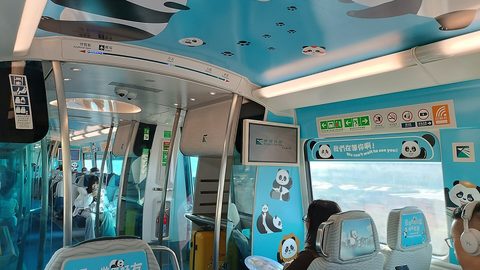 Hong Kong Flights, HKG Airport and the Airport Express
HKG to Central or Kowloon by Airport Express, taxi, or A-bus, plus how Hong Kong's in-town check-in makes it a strong flight hub.
Hong Kong Flights, HKG Airport and the Airport Express
HKG to Central or Kowloon by Airport Express, taxi, or A-bus, plus how Hong Kong's in-town check-in makes it a strong flight hub.
-
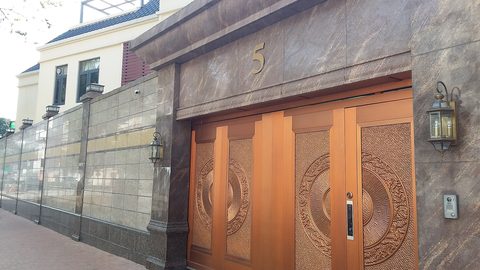 Kowloon Tong vs Ho Man Tin Hong Kong Neighbourhood Comparison
Compare Kowloon Tong's school catchments and low-rise calm with Ho Man Tin's hillside quiet and Mong Kok proximity to choose the right Hong Kong neighbourhood.
Kowloon Tong vs Ho Man Tin Hong Kong Neighbourhood Comparison
Compare Kowloon Tong's school catchments and low-rise calm with Ho Man Tin's hillside quiet and Mong Kok proximity to choose the right Hong Kong neighbourhood.
-
 Hong Kong Expat Cost of Living Broken Down by Lifestyle Tier
Real annual costs for expats in Hong Kong: budget, comfortable, and premium tiers covering rent by district, school fees, domestic helpers, and flights home.
Hong Kong Expat Cost of Living Broken Down by Lifestyle Tier
Real annual costs for expats in Hong Kong: budget, comfortable, and premium tiers covering rent by district, school fees, domestic helpers, and flights home.
-
 How to Set Up Your Finances When You First Arrive in Hong Kong
Open the right bank account, set up Octopus and FPS, and avoid costly transfer fees. A practical money setup guide for new arrivals in Hong Kong.
How to Set Up Your Finances When You First Arrive in Hong Kong
Open the right bank account, set up Octopus and FPS, and avoid costly transfer fees. A practical money setup guide for new arrivals in Hong Kong.
-
 Mobile Plans, SIM Cards and Connectivity Costs for Expats in Hong Kong
Compare 3HK, SmarTone, and CMHK mobile plans for Hong Kong expats. Monthly costs, data tiers, prepaid vs contract, and tips on staying connected abroad.
Mobile Plans, SIM Cards and Connectivity Costs for Expats in Hong Kong
Compare 3HK, SmarTone, and CMHK mobile plans for Hong Kong expats. Monthly costs, data tiers, prepaid vs contract, and tips on staying connected abroad.