Temple Street Night Market: The Stalls That Remain and the Food Nearby
Temple Street Night Market is smaller than its reputation, but the streets around it in Yau Ma Tei and Jordan still hold the food and atmosphere.
Temple Street Night Market: the Stalls That Remain and the Food Nearby
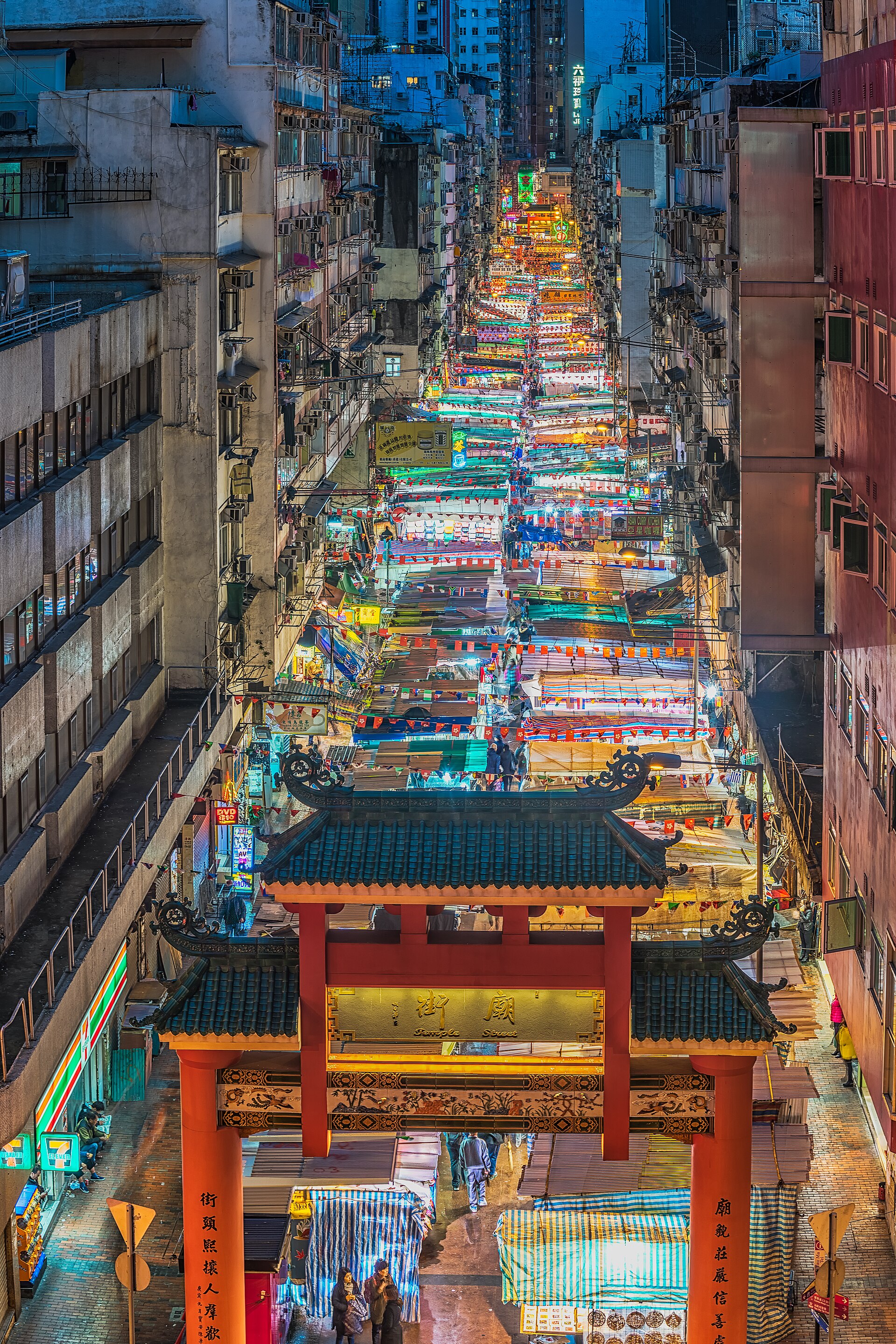
A fortune teller taps a bird cage at the junction of Temple Street and Kansu Street, a child kicks a plastic stool outside a pot rice shop, and somewhere a phone-case seller yawns behind a table of screen protectors. This is Temple Street in 2025, and it is smaller than you expected. The market that once ran the full 600 metres from Man Ming Lane to Nanking Street now concentrates its stalls into roughly 300 metres, from Kansu Street south to Nanking Street. About 100 to 120 licensed hawker stalls remain, down from around 200 before the pandemic, and the vacancy rate sits at 30 to 40 percent.
Do not let the reduced footprint trick you into skipping it. Temple Street was never really about the stalls anyway. The surrounding streets of Yau Ma Tei and Jordan are the actual draw. Treat the market as the front door to a neighbourhood that does its best work after dark.
.jpg)
- Market Section (2025): Approx. 300 m, Kansu Street to Nanking Street
- Licensed Stalls (2025): 100, 120, vacancy rate 30, 40%
- Operating Hours: Daily, 14:00, 23:00; peak stall occupancy from 18:00
- Best Arrival Time: 17:30, 18:30 for stalls and manageable crowds; 18:00, 20:00 for food only
- Fortune Tellers: 20, 30 stalls at Temple Street and Kansu Street junction; HKD 100, 500 per session
- Cantonese Opera: Friday, Saturday, Sunday, 19:00, 22:00 at Public Square Street junction
- Claypot Rice (Woo Sung Street): Hing Kee Restaurant, Four Seasons Pot Rice; HKD 60, 100 per pot
- Seafood (Nanking Street): Red-stool stalls with live tanks; HKD 88, 288 per dish
What is Still Worth Seeing on the Strip
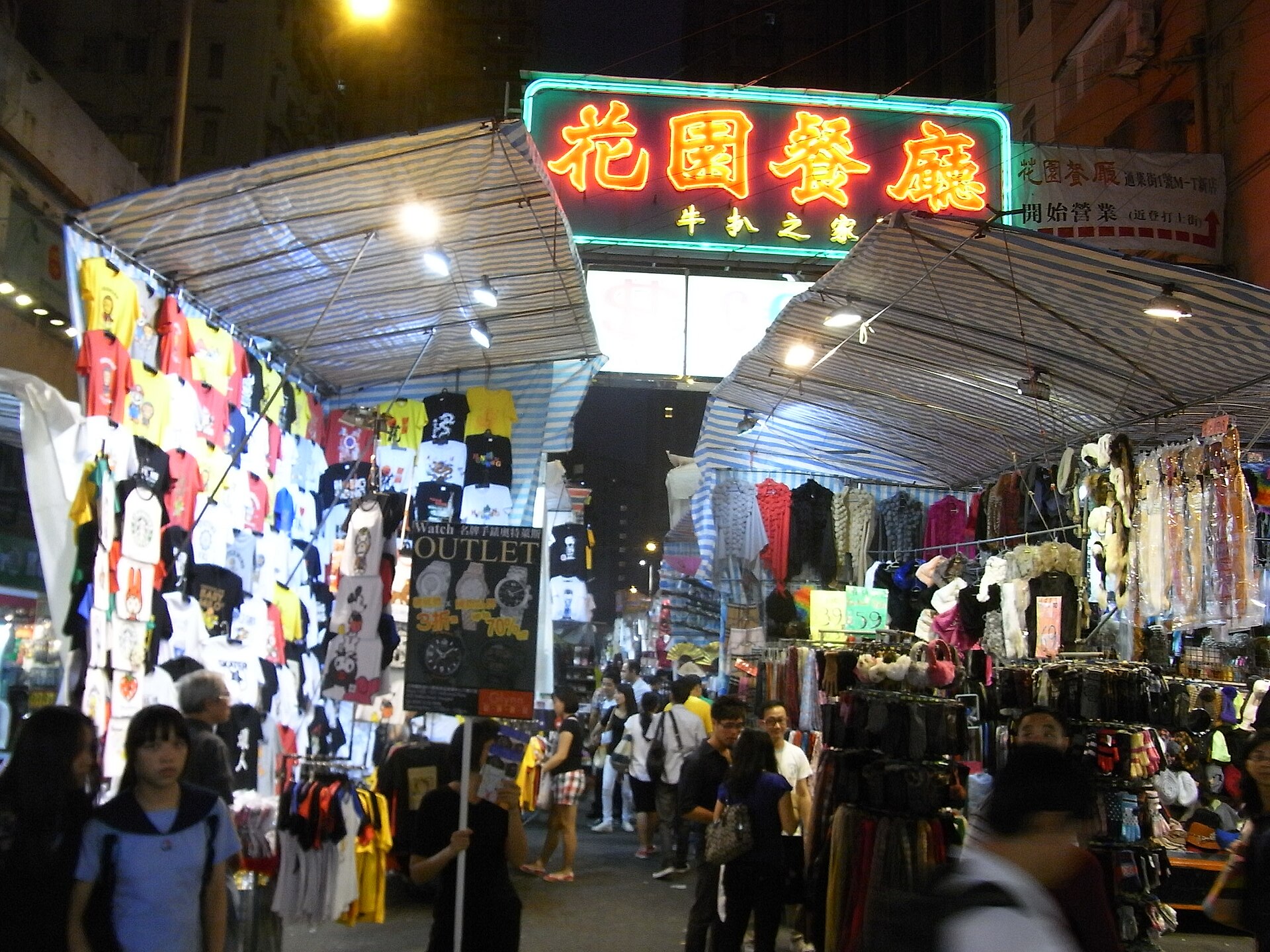
Walk the stall line from Kansu Street south. The dominant goods today are phone accessories, screen protectors, power banks, and phone cases. Secondary stalls sell unbranded apparel, printed T-shirts, socks, luggage, selfie sticks, souvenirs, and a scatter of novelty lighters and knock-off watches. The antiques and jade that defined the market’s mid-century reputation are gone. Serious electronics disappeared years ago. If you want to touch Grade A jade, walk 400 metres north to the Yau Ma Tei Jade Hawker Bazaar on Kansu and Battery Street, which runs 10:00 to 17:00 daily. Do not buy jade at Temple Street itself.
Bargaining is still the norm. Your first counter-offer should be 50 to 60 percent of the quoted price. Do not haggle at food stalls. Do not haggle with the fortune tellers, whose 20 to 30 stalls cluster at the Kansu Street junction offering face reading, palm reading, bird-card divination, and I Ching sessions for HKD 100 to 500. The bird fortune tellers are the most visually distinct. Pay in cash; many stall operators do not accept cards.
Free Opera At The Junction
The Cantonese opera performances at Public Square Street happen on Friday, Saturday, and Sunday evenings from roughly 19:00 to 22:00. Amateur troupes in traditional costumes perform with live erhu and percussion. It is not a polished production. It is a neighbourhood ritual that happens to be visible from the street, and watching for ten minutes costs nothing.
What to Skip
Skip the section between Man Ming Lane and Kansu Street if you are short on time. It is mostly empty stalls and storage. Head straight to the active zone. Skip the idea that Temple Street competes with Ladies’ Market for clothing. Ladies’ Market on Tung Choi Street has far more variety in apparel. Temple Street has more phone accessories and far better food nearby. Skip Stanley Market altogether if you only have one night in Kowloon: Stanley is daytime, fixed-price, and sealed in plastic tourist goods, not street food.
The Real Reason to Come: Woo Sung Street and Nanking Street
The best thing on Temple Street is not on Temple Street. Walk one block west to Woo Sung Street, where the pot rice stalls cluster around the junction with Nanking Street. Hing Kee Restaurant and Four Seasons Pot Rice on Arthur Street are the two names to know. A pot here costs HKD 60 to 100, charcoal-cooked, and the signature varieties are preserved sausage with chicken, eel, spare ribs with black bean sauce, and frog leg. Arrive between 18:00 and 20:00 for the shortest wait and the hottest pots. The rice is served in the pot with a spoonful of dark soy sauce on the side. Stir it through yourself. The bottom layer of crispy rice is the point.
On Nanking Street itself, between Temple Street and Woo Sung Street, the seafood stalls set up red plastic stools and tanks of live fish and crab. There are no fixed English names. Look for the tanks and the wok smoke. Cooking styles run typhoon shelter (deep-fried with garlic and chilli), steamed with soy sauce, and salt and pepper. Prices run HKD 88 to 288 per dish depending on what you order. This is not a sit-down restaurant. You order, they cook, you eat on the street. Bring wet wipes.

How to Build an Evening in Yau Ma Tei and Jordan
Start at 17:30 at the Tin Hau Temple compound at the north end of Temple Street, where Public Square Street meets. The temple dates to 1865 and contains five buildings: Tin Hau Temple, Shing Wong Temple, Kwun Yum Temple, Shea Tan, and a study hall. Entry is free, hours are 08:00 to 17:00, so arrive before closing. From there, walk south through the market as stalls finish setting up. By 18:00, the full strip is active and the worst of the evening crowds have not yet arrived.
At 18:30, turn west onto Woo Sung Street for pot rice at Hing Kee or Four Seasons. Eat early enough to avoid the 19:30 queue. After rice, walk south to Nanking Street for a seafood dish or two. Then return to Temple Street for the fortune tellers, the opera if it is a weekend, and a stroll through the remaining stalls as the night peaks. Finish with an egg waffle from a street stall on your way to Jordan MTR station, a five minute walk south on Nathan Road.
What This Evening Is Not
It is not a market checklist. If you walk Temple Street expecting to browse antiques or haggle for a jade bangle, you will be disappointed. If you arrive expecting a food district that rivals Sham Shui Po or Mong Kok, you will eat well but not broadly. The strength of this night is the compression: temple, fortune tellers, opera, pot rice, seafood, and street stalls, all within a 400 metre radius, all in the same three hours.
Common Questions
Is Temple Street Night Market still worth visiting in 2025?
Yes, but only if you combine the stalls with the food streets. The market alone has shrunk by 30 to 40 percent and leans heavily on phone accessories. The pot rice on Woo Sung Street and seafood on Nanking Street are the real draw.
What time should I arrive at Temple Street Night Market?
Arrive at 17:30 to 18:30. Stalls are fully set up by 18:00, crowds are still manageable, and you can eat at the pot rice stalls before the queues form around 19:30.
Where are the claypot rice stalls near Temple Street?
On Woo Sung Street, one block west of Temple Street. Hing Kee Restaurant and Four Seasons Pot Rice are the two main names. Prices run HKD 60 to 100 per pot, cooked over charcoal.
Can I buy jade or antiques at Temple Street Night Market?
Not reliably. The antiques and jade stalls are gone. For jade, visit the Yau Ma Tei Jade Hawker Bazaar on Kansu and Battery Street, open 10:00 to 17:00 daily, 400 metres north of the market entrance.
Read next
-
 The Star Ferry
 is the cheapest harbour crossing in Hong Kong and a working commute, best ridden at dusk between Tsim Sha Tsui and Central.
The Star Ferry
The Star Ferry is the cheapest harbour crossing in Hong Kong and a working commute, best ridden at dusk between Tsim Sha Tsui and Central.
-
 Hong Kong First Arrival Guide From Airport to Understanding the City
Hong Kong rewards those who treat it as a series of distinct neighbourhoods rather than a single city centre. Here is the geography and rhythm every newcomer needs.
Hong Kong First Arrival Guide From Airport to Understanding the City
Hong Kong rewards those who treat it as a series of distinct neighbourhoods rather than a single city centre. Here is the geography and rhythm every newcomer needs.
-
 Hong Kong Hotels and Serviced Apartments Before a Lease
Serviced apartments in Wan Chai, Kennedy Town, and Sai Ying Pun compared for the six weeks before you sign a Hong Kong lease.
Hong Kong Hotels and Serviced Apartments Before a Lease
Serviced apartments in Wan Chai, Kennedy Town, and Sai Ying Pun compared for the six weeks before you sign a Hong Kong lease.
-
 Where to Stay in Hong Kong a Shortlist of Districts Compared Honestly
Hong Kong districts vary wildly in rent, space, and commute reality. This shortlist compares where to stay based on what you actually get for your money.
Where to Stay in Hong Kong a Shortlist of Districts Compared Honestly
Hong Kong districts vary wildly in rent, space, and commute reality. This shortlist compares where to stay based on what you actually get for your money.
-
 Hong Kong Flights, HKG Airport and the Airport Express
HKG to Central or Kowloon by Airport Express, taxi, or A-bus, plus how Hong Kong's in-town check-in makes it a strong flight hub.
Hong Kong Flights, HKG Airport and the Airport Express
HKG to Central or Kowloon by Airport Express, taxi, or A-bus, plus how Hong Kong's in-town check-in makes it a strong flight hub.
- Hong Kong Typhoon Signals and Rainstorm Warnings Explained From Signal 1 to 10 and black rain, what each Hong Kong typhoon warning closes and how to prepare.
- Your First Month in Hong Kong in the Order That Works The first month in Hong Kong, sequenced: ID card, bank, phone, lease and helper in the order that works.
- Hong Kong Island or Kowloon for Your First Home The real trade-offs between living on Hong Kong Island or in Kowloon, from rent to commute to food.
-
 Hong Kong Healthcare and Insurance for New Arrivals
Hong Kong has excellent but split healthcare: cheap public care with long waits, or fast private care at a price.
Hong Kong Healthcare and Insurance for New Arrivals
Hong Kong has excellent but split healthcare: cheap public care with long waits, or fast private care at a price.